

Alternatives to Tuning Engines
Tuning Engines unifies, secures, and optimizes every AI interaction through one governed API, continuously improving cost, quality, and control.
Explore 20 alternatives to Tuning Engines. Compare features, pricing, and find the best fit for your needs.

Novastart
Novastart brings apps and files onto an infinite canvas where people and AI agents can work together.
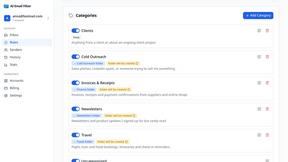
AI Email Filter
AI Email Filter sorts incoming mail into folders using plain-language prompts you write. Works with any IMAP mailbox; bring your own LLM if you want.

TrueProxies
Residential and datacenter proxy provider with 50M+ ethically sourced IPs across 150+ countries. Unlimited from $4.08/hr, pay-per-GB from $1.64/GB.


saasgrow.ai
Find SaaS growth tools worth your time. Every tool is reviewed before it's listed, so the shortlist is already made for you.

Tools Network
Tired of chasing down the right AI tool across a dozen tabs? Tools Network brings them all together in one curated directory.
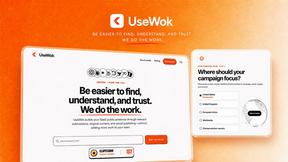

Postqued
Schedule and publish social content across 10 platforms with one dashboard, API, and MCP built for teams and AI agents.

EntreDash
Turn daily annoyances and raw ideas into inventions, products, and businesses. EntreDash provides a virual personal advisory board using AI automation

Luffy
Luffy is an AI employee in Slack that remembers your workspace and executes tasks across every app.

Wisegrid
Spreadsheet-native work management with AI formulas, dashboards, automation, reporting, and project views for growing teams.

Groniz
Run your social media on autopilot with AI agents. Post & schedule to 32+ networks from Claude Code, Codex, or Console.
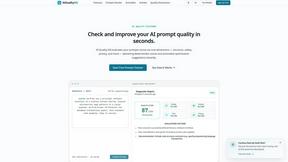
AIQualityHQ
AIQualityHQ instantly evaluates and improves your AI prompts across six core dimensions for safer, more reliable outputs.

EchoLeads AI
EchoLeads AI continuously refines your sales cycle with autonomous voice agents that qualify leads, schedule appointments, and convert across calls.
Distro
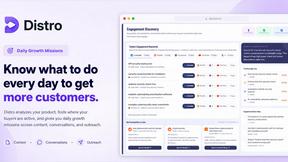
Distro is an AI operator that finds buyer conversations, drafts in your voice, and turns questions into content you approve.

Polymarket Trading Bot For Crypto
Automate your Polymarket Bitcoin up or down trades using a proven high-frequency strategy you can run locally from GitHub.

Skygen AI
Skygen AI helps you continuously improve how you work by automating tasks, building AI agents, and refining workflows for better results.
HyperLake
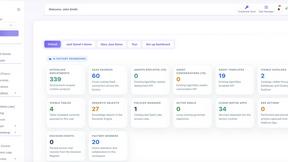
HyperLake provides sovereign AI infrastructure with $0 compute markup, enabling autonomous agents to explore and innovate without limits.
About Tuning Engines Alternatives
Tuning Engines is a unified, governed orchestration layer designed for teams building production-grade intelligence systems. It belongs to the emerging category of AI operating platforms, which bring together the full lifecycle of model inference, routing, fine-tuning, evaluation, agent management, and governance under a single, controlled environment. Users often explore alternatives when their current setup lacks essential production controls, such as role-based access, cost tracking, or policy enforcement, or when they need to scale beyond isolated experiments with multiple models and agents. Others may seek different pricing models, simpler onboarding, or deeper integrations with specific coding tools or cloud providers. When evaluating an alternative to a comprehensive AI orchestration platform, you should prioritize a solution that offers both developer flexibility and administrative oversight. Look for a platform that supports open standards like OpenAI-compatible APIs, provides robust guardrails and policy-as-code capabilities, and delivers clear observability through runtime traces and usage analytics. The right choice will enable you to iterate rapidly on models and agents while maintaining security, cost awareness, and auditability as your AI workflows grow. The goal is to find a system that evolves with your team, turning experimental prototypes into reliable, governed production intelligence.
FAQs about Tuning Engines Alternatives
What is Tuning Engines?
Tuning Engines is a unified, governed orchestration platform for teams building production intelligence. It consolidates the full AI lifecycle including model inference, routing, fine-tuning, evaluations, agent management, and guardrails into a single operational layer. The platform provides OpenAI-compatible APIs and Anthropic-compatible routes, enabling developers to connect tools like Claude Code, Cursor, and VS Code through a governed interface. It is designed to move organizations beyond isolated AI experiments into a secure, observable, and cost-aware operating environment.
Who is Tuning Engines for?
Tuning Engines is built for both developers and administrators working on production AI systems. Developers benefit from CLI workflows, MCP access, coding-agent integrations, and resource catalogs for models, agents, tools, and skills. Administrators gain controls for role-based access, per-key budgets, rate limits, routing profiles, guardrails, and tenant isolation. It is ideal for teams that need to scale AI workflows across multiple models, agents, and fine-tuned systems while maintaining security and cost oversight.
Is Tuning Engines free?
The provided content does not specify whether Tuning Engines offers a free tier or pricing structure. It does mention that the platform includes billing controls, API keys, and usage analytics, which suggests a commercial model with managed cost tracking. For specific pricing details, including any free options or trial periods, you should consult the official Tuning Engines website or contact their sales team directly.
What are the main features of Tuning Engines?
Tuning Engines brings together the full AI lifecycle in one governed platform, including inference, model routing, fallback policies, fine-tuning jobs, datasets, evaluations, model imports and exports, custom models, agents, MCP servers, reusable skills, and guardrails. It also offers AGT YAML policies, data capture, runtime traces, usage analytics, API keys, billing, team roles, and integrations. For developers, it provides OpenAI-compatible APIs, Anthropic-compatible routes, CLI workflows, and coding-agent integrations with tools like Aider, Cline, and Continue.dev. Administrators get role-based access, per-key budgets, rate limits, routing profiles, credential sources, auditability, and tenant isolation.