
Gaffa vs Patrivox
Side-by-side comparison to help you choose the right product.

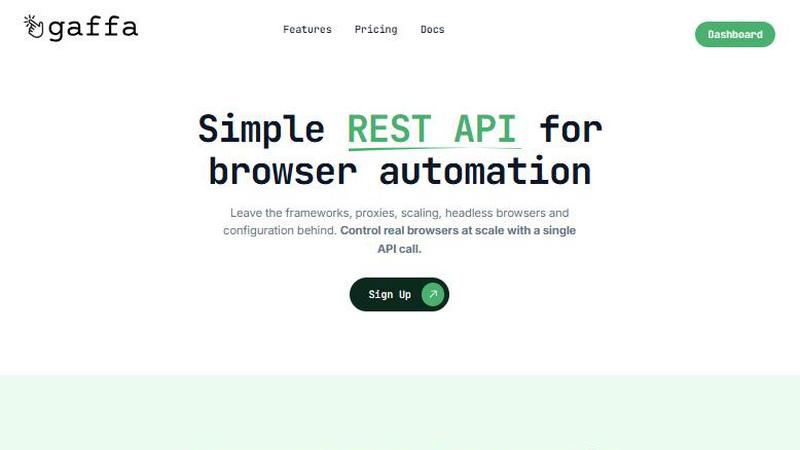
Gaffa's API evolves to simplify web scraping and browser automation at any scale.
Last updated: March 1, 2026

Patrivox
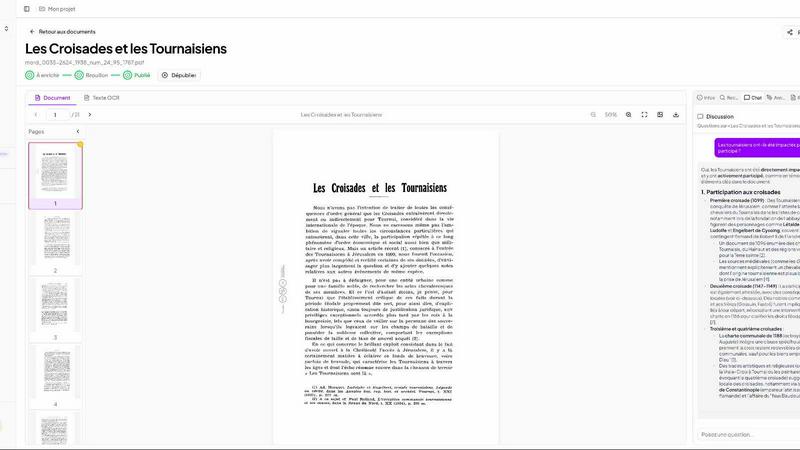
Patrivox uses AI to digitize and make your entire archive searchable in minutes.
Last updated: March 4, 2026
Visual Comparison
Gaffa
Patrivox
Feature Comparison
Gaffa
Simple REST API
Gaffa eliminates the steep learning curve associated with traditional browser automation frameworks like Playwright or Selenium. By abstracting their complex functionalities into a straightforward REST API, developers can initiate and control real browser sessions with a single HTTP call. This framework-free approach dramatically reduces development time and complexity, allowing you to build and iterate on your web automation projects faster and more efficiently, focusing on logic rather than configuration.
Ready-to-Scale Infrastructure
Scaling a web data project presents significant challenges in resource management and reliability. Gaffa's architecture is built from the ground up to handle these demands effortlessly. The platform manages all the underlying complexities, including concurrent request handling, proxy rotation, and performance optimization. This means you can scale your data extraction operations from a few requests to millions without worrying about infrastructure, ensuring your projects grow smoothly and reliably.
Real Browser Automation with Proxies
Gaffa uses real, fully-featured browsers to execute your automations, ensuring perfect JavaScript rendering and avoiding the quirks of headless browsers. Every action is performed exactly as a human would do it. Coupled with a seamlessly integrated global network of residential proxies, you can specify geographic locations for your requests, ensuring fast, reliable, and geographically targeted access to web data without the hassle of managing proxy providers yourself.
Advanced Data Processing & Observability
Gaffa goes beyond simply fetching raw HTML. It includes built-in data processing capabilities to deliver the information you need in the most usable format, whether that's simplified HTML, LLM-ready markdown, or a self-contained offline page. Furthermore, full observability is provided through session recording, allowing you to visually replay every automation. This transparency is crucial for debugging, verifying data accuracy, and continuously improving your automation scripts.
Patrivox
Next-Generation AI Processing
Patrivox utilizes cutting-edge Mistral AI to perform more than just basic text recognition. It automatically processes batch uploads of hundreds of PDFs, extracting text with high accuracy, identifying and classifying named entities (people, places, organizations, dates), and enriching document metadata. This foundational feature eliminates manual data entry and configuration, creating a rich, structured dataset from unstructured documents in minutes, forming the basis for all powerful search and discovery tools.
Intelligent Search & AI Chat
Move beyond simple keyword matching. The platform offers instant full-text search across the entire collection with built-in typo tolerance. For deeper inquiry, users can ask complex questions in plain language through an AI chat interface. The AI synthesizes information from across the documents to provide concise answers, always citing the exact source pages for verification and further exploration, creating a seamless loop of question and discovery.
Interactive Knowledge Graph (Constellation)
This feature visually uncovers the hidden narratives within your archives. Every entity extracted by the AI is automatically linked across documents, forming an interactive web of connections called "Constellation." Users can navigate from person to place to organization, discovering relationships and contextual links that were previously obscured, enabling novel research insights and a holistic view of the archival content.
Sovereign European Hosting & Sharing
Built with European data sovereignty as a core principle, Patrivox is GDPR-native and hosted exclusively on European servers. It includes robust audit logs for transparency. The platform also supports secure, scalable collaboration, offering unlimited reader accounts for researchers, team members, or the public, while allowing multiple administrators to manage access and content, ensuring knowledge is both protected and shareable.
Use Cases
Gaffa
Large-Scale Web Scraping and Data Aggregation
Businesses in market research, competitive intelligence, and price monitoring require vast amounts of accurate, timely data from across the web. Gaffa automates this extraction at scale, handling thousands of targets simultaneously with its robust proxy network and anti-detection measures. This enables companies to build comprehensive datasets for analysis without the operational burden of maintaining fragile scraping infrastructure, turning web data into a consistent, reliable asset.
Automated Testing and Quality Assurance
For development teams, ensuring a web application works flawlessly across different scenarios is a continuous cycle of testing. Gaffa can automate complex user journeys and interactions in real browsers for QA purposes. Its ability to record sessions provides perfect reproducibility for bug reporting, and its scalable nature allows for running extensive test suites in parallel, significantly accelerating the development feedback loop and improving software quality iteratively.
Content Monitoring and Archival
Organizations needing to monitor regulatory updates, news, or digital content changes can use Gaffa to schedule regular, automated visits to target web pages. The service can capture screenshots, save self-contained offline versions, or extract specific content into structured formats. This creates a reliable, automated audit trail and archival system, ensuring critical web-based information is never missed and is stored in a processable format for future reference.
AI and LLM Data Pipeline Preparation
Training and fine-tuning large language models (LLMs) require massive, clean datasets often sourced from the web. Gaffa's ability to extract and process pages directly into LLM-ready markdown format is invaluable. It automates the collection and preprocessing of web content, removing boilerplate and formatting noise, thereby creating high-quality, structured text corpora efficiently. This accelerates the data preparation phase, allowing AI teams to focus on model development and refinement.
Patrivox
Municipal Archives Digitization
Municipalities can systematically digitize and unlock their historical records, such as council deliberations, civil registers, and official correspondence. Patrivox automates the indexing, allowing citizens, historians, and staff to find specific information in seconds instead of hours, thereby enhancing governmental transparency and preserving local heritage for future generations through continuous digital curation.
Historical Society Collections Management
Historical societies and associations can make their bulletins, yearbooks, and documentary collections fully explorable. Volunteers are freed from manual indexing tasks, while members and the public can search for ancestors, local events, or topics of interest through both search and the knowledge graph, driving engagement and supporting ongoing research projects with ever-improving access.
Heritage Library Special Collections
Libraries holding special collections, rare books, or unique manuscripts can use Patrivox to open these resources to a wider audience without compromising the physical items. Researchers can perform deep, semantic searches across digitized materials, discovering connections between works, authors, and subjects that fuel academic study and public exhibitions.
Diocesan and Parish Archive Preservation
Dioceses and parishes can preserve fragile historical documents like parish registers, ecclesiastical minutes, and correspondence. Patrivox secures this cultural heritage in a digital format, enables easy searching for genealogical or historical data, and allows controlled sharing with accredited researchers, ensuring these vital records remain accessible and analyzable for centuries.
Overview
About Gaffa
In the dynamic landscape of web data, the challenge isn't just about extraction; it's about building a reliable, scalable, and maintainable system that evolves with your needs. Gaffa is the answer to this continuous cycle of improvement. It is an innovative API designed to simplify and supercharge web data extraction and browser automation, allowing developers, data analysts, and businesses to break free from the endless maintenance of complex scraping pipelines. Gaffa's core value proposition is its ability to abstract away the formidable technical hurdles—such as managing headless browsers, configuring proxies, solving CAPTCHAs, and ensuring seamless scalability—so your team can focus on deriving insights and building your core product. By providing a simple, framework-free REST API, Gaffa empowers you to control real browsers at scale with a single call, ensuring JavaScript rendering by default and human-like interactions. This commitment to simplification is matched by a robust architecture that grows with you, handling whatever volume you throw at it while offering advanced data processing and full observability. With Gaffa, you're not just accessing data; you're adopting a partner in your journey of iterative growth and continuous operational refinement.
About Patrivox
Patrivox is a sovereign European SaaS platform that breathes new life into static archives. It is designed for heritage institutions, municipal services, associations, and enterprises that hold vast collections of scanned documents but struggle with accessibility. The platform transforms these PDFs into a dynamic, fully searchable knowledge base with remarkable speed and intelligence. By simply dragging and dropping files, users leverage Mistral AI's advanced OCR and entity recognition to automatically extract every word, identify key entities like people, places, and organizations, and map their connections in an interactive knowledge graph. This continuous cycle of ingestion and analysis makes previously inaccessible knowledge instantly available. Users can search with typo tolerance or ask questions in natural language, receiving AI-generated answers with direct citations to source documents. Patrivox's core value is turning dormant archives into living resources for research, administration, and public engagement, all within a GDPR-native framework hosted entirely in Europe.
Frequently Asked Questions
Gaffa FAQ
What is a credit and how is it calculated?
Credits are Gaffa's unit of consumption for its API. They are calculated based on two primary factors: request time and proxy usage. Browser request time is billed at 1 credit per 30 seconds (or 2 credits per 30 seconds if screen recording is enabled). Additionally, any request using a residential proxy (proxy_location parameter) consumes 1500 credits per 1GB of bandwidth used. Each successful API call deducts the corresponding credits from your monthly allowance.
Does Gaffa offer a free trial?
Yes, Gaffa provides a comprehensive free tier that allows you to experiment with all core API features. You can sign up and immediately start building automations that run on our dedicated demo site (demo.gaffa.dev). This sandbox environment lets you fully test the API's capabilities, from browser control to data processing, without any cost or credit card required, before upgrading to a paid plan for use on the live web.
What is Gaffa's refund policy?
Gaffa is committed to customer satisfaction. We are happy to offer a full refund for your current billing period if you request it before using any of the credits allocated for that month. This policy is designed to give you confidence when upgrading to a paid plan, ensuring you only pay for the service if it meets your needs as you integrate and test it within your own workflows.
Do unused credits roll over to the next month?
No, credits do not roll over from one billing cycle to the next. The credit allowances included in your monthly subscription plan (Starter, Startup, Growth) are reset at the start of each new billing period. This model encourages the continuous and efficient use of the service within your operational cycle. For consistent high-volume needs, our pay-as-you-go credit packs or custom enterprise plans are recommended.
Patrivox FAQ
How does Patrivox ensure data privacy and sovereignty?
Patrivox is built on a foundation of European data sovereignty. All data processing complies strictly with the GDPR (General Data Protection Regulation). The platform and all customer data are hosted exclusively on servers located within the European Union. This ensures that your sensitive archival documents remain under European legal jurisdiction and are protected by robust, audited security standards.
What types of documents can I upload to Patrivox?
The primary supported format is PDF, which covers the vast majority of scanned document archives. You can upload documents one by one or in large batches of hundreds of files at once. The platform is optimized for text-based PDFs, including those generated from scans, and it utilizes advanced OCR to extract text from image-based PDFs effectively.
What is the "Constellation" or knowledge graph feature?
The Constellation is an interactive visual map of the people, places, and organizations found in your documents and how they are connected. The AI automatically identifies these entities and links them across different documents. This allows you to visually explore relationships, see which documents mention specific entities together, and discover historical or contextual connections that are not apparent through linear reading or simple search.
Can I collaborate and share my archives with others?
Yes, collaboration is a key feature. Patrivox allows you to invite an unlimited number of readers to your archive at no extra cost. You can also have multiple administrator accounts to help manage the platform. This makes it ideal for institutions that want to provide public access to researchers, involve team members in curation, or share discoveries with a broader community securely.
Alternatives
Gaffa Alternatives
Gaffa is a powerful tool in the productivity and management category, designed to simplify web scraping and browser automation. It provides a single API to control real browsers, handling the complexities of proxies, scaling, and data extraction so teams can focus on insights rather than infrastructure. Users often explore alternatives to find a solution that aligns perfectly with their specific needs. This could be due to budget constraints, a requirement for different technical features, or the need to integrate with a particular platform or workflow. The search for the right tool is a natural part of refining a data strategy. When evaluating options, consider the core capabilities that matter most to your projects. Look for reliable performance, ease of use, and transparent pricing. The goal is to select a platform that not only meets your current demands but also supports continuous improvement and can scale alongside your evolving data requirements.
Patrivox Alternatives
Patrivox is a powerful AI-driven platform in the document intelligence and content automation space. It specializes in transforming scanned documents and PDFs into a fully searchable, interactive knowledge base using advanced OCR and entity recognition. Users often explore alternatives for various reasons, such as specific budget constraints, the need for different integration capabilities, or requirements for particular feature sets not covered by a single solution. The search for the right tool is a process of continuous refinement to find the optimal fit. When evaluating options, consider core capabilities like OCR accuracy, search functionality, data security, and the ability to scale with your document volume. The goal is to select a platform that not only digitizes information but truly unlocks its value through intelligent organization and retrieval, fostering an environment of iterative knowledge discovery.