

Alternatives to xyOps
xyOps continuously evolves your infrastructure automation with visual workflows, smart monitoring, and adaptive job scheduling.
Explore 20 alternatives to xyOps. Compare features, pricing, and find the best fit for your needs.

JevModel
Jev turns text or JSON into Choice, Score and Noul answers with probabilities. Build decision flows, process batches and call the API from one Console

Novastart
Novastart brings apps and files onto an infinite canvas where people and AI agents can work together.

AI Email Filter
AI Email Filter sorts incoming mail into folders using plain-language prompts you write. Works with any IMAP mailbox; bring your own LLM if you want.

TrueProxies
Residential and datacenter proxy provider with 50M+ ethically sourced IPs across 150+ countries. Unlimited from $4.08/hr, pay-per-GB from $1.64/GB.
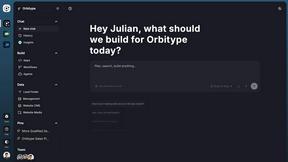


saasgrow.ai
Find SaaS growth tools worth your time. Every tool is reviewed before it's listed, so the shortlist is already made for you.

Tools Network
Tired of chasing down the right AI tool across a dozen tabs? Tools Network brings them all together in one curated directory.


Postqued
Schedule and publish social content across 10 platforms with one dashboard, API, and MCP built for teams and AI agents.

EntreDash
Turn daily annoyances and raw ideas into inventions, products, and businesses. EntreDash provides a virual personal advisory board using AI automation

Luffy
Luffy is an AI employee in Slack that remembers your workspace and executes tasks across every app.

Wisegrid
Spreadsheet-native work management with AI formulas, dashboards, automation, reporting, and project views for growing teams.

Groniz
Run your social media on autopilot with AI agents. Post & schedule to 32+ networks from Claude Code, Codex, or Console.
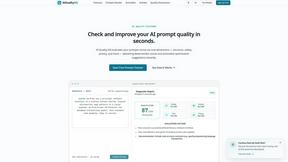
AIQualityHQ
AIQualityHQ instantly evaluates and improves your AI prompts across six core dimensions for safer, more reliable outputs.

EchoLeads AI
EchoLeads AI continuously refines your sales cycle with autonomous voice agents that qualify leads, schedule appointments, and convert across calls.
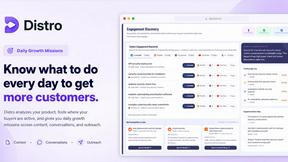
Distro
Distro is an AI operator that finds buyer conversations, drafts in your voice, and turns questions into content you approve.

Polymarket Trading Bot For Crypto
Automate your Polymarket Bitcoin up or down trades using a proven high-frequency strategy you can run locally from GitHub.

Skygen AI
Skygen AI helps you continuously improve how you work by automating tasks, building AI agents, and refining workflows for better results.

Tuning Engines
Tuning Engines unifies, secures, and optimizes every AI interaction through one governed API, continuously improving cost, quality, and control.
About xyOps Alternatives
In the evolving landscape of workflow automation and operational control, xyOps represents a next-generation platform that unifies job scheduling, server monitoring, alerting, and incident response into a single, cohesive system. It is designed for teams who want to automate their stack without sacrificing data sovereignty or visibility, positioning itself as an open and extensible solution that runs anywhere without hidden paywalls. However, users often begin their search for alternatives due to specific friction points: a need for a different pricing model, a desire for more granular feature sets, or a requirement to integrate with a unique legacy infrastructure that a closed system cannot accommodate. The journey toward the right tool is rarely linear, and it requires a continuous reassessment of what your operations truly need to evolve. When evaluating potential replacements, the focus should shift from feature lists to long-term adaptability and ownership. Look for a platform that offers transparent, predictable pricing without locking essential capabilities behind premium tiers, ensuring your automation stack can scale as your processes mature. Equally important is the ability to maintain full control over your data and telemetry—avoiding solutions that push metrics to external servers ensures your visibility remains uncompromised. The ideal alternative will support iterative improvement, allowing you to start with core job scheduling and monitoring, then layer in alerting and incident response as your workflows demand it, without ever forcing a complete rebuild of your operational foundation.
FAQs about xyOps Alternatives
What is xyOps?
xyOps is a next-generation system that combines job scheduling, workflow automation, server monitoring, alerting, and incident response into a single, cohesive platform. It is built to give developers and operations teams complete control over their automation stack without sacrificing data privacy or operational freedom. The platform is open, extensible, and designed to run in any environment, making it a versatile choice for modern infrastructure management.
Who is xyOps for?
xyOps is designed for developers and operations teams who need to automate, monitor, and respond to incidents without relying on external telemetry or hidden paywalls. It is ideal for organizations that value data sovereignty and want a single pane of glass for their entire automation and monitoring lifecycle. The platform supports teams that are iterating on their workflows and require an extensible system that can adapt to changing operational demands.
Is xyOps free?
While xyOps does not hide features behind paywalls, its pricing model is based on providing transparent access to its core capabilities without pushing users into restrictive tiers. The platform is designed to be open and run anywhere, which means users can evaluate its full feature set without surrendering data or visibility. For specific pricing details, including any free tiers or trial options, users should consult the official xyOps documentation or contact the provider directly.
What are the main features of xyOps?
xyOps offers a unified set of features including job scheduling, workflow automation, server monitoring, alerting, and incident response. All of these capabilities are combined into a single platform, eliminating the need for multiple disjointed tools. The system is extensible and open, allowing teams to customize their automation stack without hidden restrictions or forced telemetry, ensuring continuous improvement of their operational processes.