

Alternatives to LoadTester
LoadTester lets you improve performance iteratively by running and refining HTTP load tests with live analytics and no infrastructure to manage.
Explore 20 alternatives to LoadTester. Compare features, pricing, and find the best fit for your needs.


GPT Image 2 API
GPT Image 2 API generates and edits production-ready images with clear text, reference images, and developer-friendly API workflows.

Firma.dev
Pay-as-you-go e-signature API and no-code sending. €0.049 per envelope, no monthly minimums, legally valid in 55+ countries.

Ornold
Ornold MCP lets AI agents control Chromium and antidetect browsers: click, type, read screens, record workflows, replay profiles without scripts.

AIQualityHQ
AIQualityHQ instantly evaluates and improves your AI prompts across six core dimensions for safer, more reliable outputs.

RedLinz
RedLinz turns screenshots into AI prompts by letting you circle and annotate exactly what you want an LLM to change.
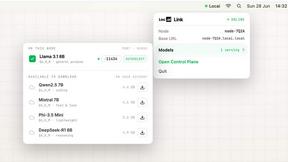
Locai
Locai lets you run powerful AI models on your own hardware, keeping data private and cutting cloud costs.
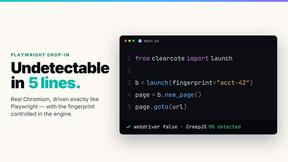
Clearcote
Clearcote is an open-source, de-Googled Chromium drop-in for Playwright and Puppeteer that gives you engine-level fingerprint control for a single.

JustLaunched
JustLaunched helps indie makers iteratively launch, reach buyers, and blast across directories to continuously improve discovery.

online audio test
Test your mic, speakers, latency, and hearing instantly with free, no-signup audio tools that keep getting better.
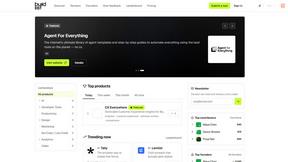
Buildlist
Turn any AI API key into an instant SaaS directory listing, then watch your tool grow through continuous discovery and feedback.

Push My App
Push My App writes, optimizes, and submits your App Store and Play Store listings from one dashboard, so you can keep coding.

MCPize
MCPize helps developers discover, install, and manage premium MCP servers while publishers earn 80% revenue share.
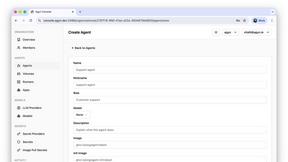
Agyn
Agyn ships secure AI agents to any team, iterating on access controls and budgets to continuously improve enterprise safety.
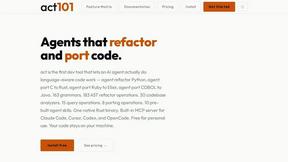
act101
act101 empowers AI agents to refactor and port code seamlessly across 163 languages with advanced grammar tools and operations.


About LoadTester Alternatives
LoadTester is a developer-focused tool in the Dev Tools category that simplifies the process of running HTTP and API load tests by removing the need to manage complex infrastructure. Instead of building and maintaining test servers, teams can create a test, define virtual users or requests per second, and immediately monitor live latency and error rates. Users often begin searching for alternatives when they hit specific pricing thresholds that don’t align with their budget, encounter a need for deeper protocol support beyond HTTP/API, or require a different deployment model such as on-premises hosting. Others may look for alternatives if they need more granular control over test scripting, advanced reporting dashboards, or tighter integration with a particular CI/CD pipeline that LoadTester does not natively support. When evaluating an alternative, focus on how well the tool fits into your existing workflow and whether it supports the iterative cycle of testing, reviewing, and improving performance. Look for a solution that allows you to schedule tests, compare runs side by side, and export results so you can catch regressions early and prevent issues from reaching production. The ideal platform should offer a balance between simplicity for quick checks and depth for comprehensive analysis, ensuring that as your team matures in its performance testing practice, the tool can grow with you rather than forcing you to switch again. Prioritize solutions that provide transparent pricing, reliable live monitoring, and the ability to seamlessly integrate with your current stack.
FAQs about LoadTester Alternatives
What is LoadTester?
LoadTester is a developer tool designed to simplify HTTP and API load testing by eliminating the need to set up and maintain testing infrastructure. It allows users to quickly create tests, define virtual users or requests per second, and monitor live latency and error rates during execution. The platform also provides detailed results, run comparisons, and export capabilities to help teams catch performance regressions early. It fits into the Dev Tools category and is built for continuous improvement workflows.
Who is LoadTester for?
LoadTester is built for developers and engineering teams who need to run repeatable performance checks on their HTTP and API endpoints without the overhead of managing load testing infrastructure. It is ideal for teams that want simple, scheduled tests integrated into their existing development and deployment cycles. The tool is especially useful for those who need to monitor live metrics, compare test runs over time, and catch regressions before they impact end users.
Is LoadTester free?
LoadTester offers a tiered pricing model that typically includes a free tier with basic capabilities to get started, such as running a limited number of tests or virtual users. For teams requiring more extensive testing, scheduled runs, API access, or advanced integrations, paid plans are available to unlock higher limits and additional features. The exact pricing structure should be reviewed on the official LoadTester website to understand what fits your team’s scale.
What are the main features of LoadTester?
LoadTester provides core features for creating HTTP and API load tests, including the ability to choose between virtual users or requests per second, live monitoring of latency and error rates, and detailed post-test result reviews. It supports run comparisons to track performance changes over time, exports for sharing data, scheduled tests for ongoing checks, and API access for workflow integration. These features are designed to help teams continuously improve performance and prevent regressions before they reach production.