

Alternatives to Headless Domains
Headless Domains gives AI agents persistent, verifiable identities that evolve with every interaction to build lasting trust.
Explore 20 alternatives to Headless Domains. Compare features, pricing, and find the best fit for your needs.

CodexFuse Solution
All-in-One Managed IT Platform on Credits — Hosting, VPS, AI Agents, Business Email & Software Development
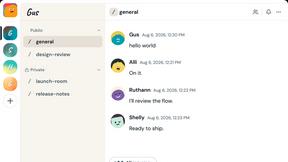
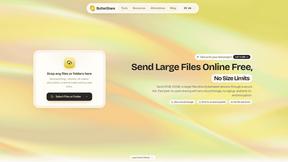
ButterShare
Send files straight between two browsers with a 6-digit key. No signup, no install, nothing stored on a server.

Manifolds
Manifolds deanonymizes and researches your users at signup, so you can know who your users actually are.
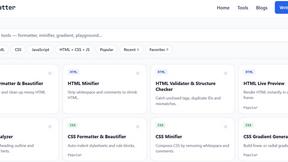
JoMatter
Jomatter provides free online tools for HTML, CSS, and JavaScript developers, helping simplify common web development and coding tasks.

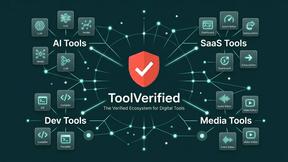
ToolVerified
A human-tested directory of new software, AI apps, and dev tools. Tested by real people, ranked by honest community votes.
Mainspring
Mainspring turns the settings macOS hides into 90+ one-click, fully reversible power-ups for Finder, Dock, screenshots and more. $29 once.
Crumb
A Mac menu bar app for a full disk. See what is using your space, read whether it comes back on its own, and remove only what you tick.
Screen Issues
Free Online Screen Test Tool - Instantly diagnose dead pixels, lines, color issues, and flickering. Multiple test modes, no download needed.
OG Image Generator
Paste a URL and AI designs on-brand Open Graph images from your page's colours, fonts and logo. Free, no sign-up.
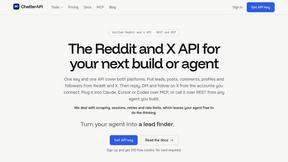
ChatterAPI
One API key and one credit balance for Reddit and X data. REST endpoints and a hosted MCP server, so your code and your agents call the same tools.
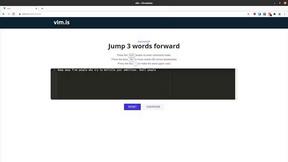
Vim.is
Vim.is is a simple online tool that helps you learn and practice Vim keyboard shortcuts quickly.
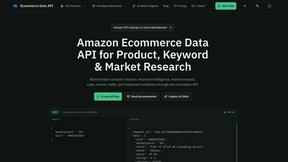
Ecommerce Data API
Amazon research data APIs for developers, sellers and AI agents. Integrate product, keyword and market research through REST APIs and MCP.
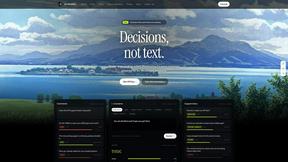
JevModel
Jev turns text or JSON into Choice, Score and Noul answers with probabilities. Build decision flows, process batches and call the API from one Console
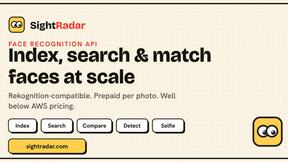
SightRadar
Face recognition API, a drop-in replacement for AWS Rekognition. Index, search, compare and detect faces, billed per photo with no subscription.
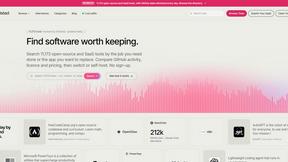
Enlisted
Search 20,000+ open-source and SaaS tools by the job you need done or the app you want to replace.
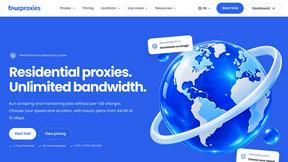
TrueProxies
Residential and datacenter proxy provider with 50M+ ethically sourced IPs across 150+ countries. Unlimited from $4.08/hr, pay-per-GB from $1.64/GB.
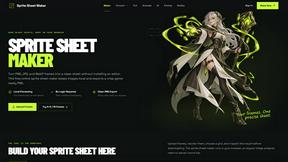
Sprite Sheet Maker
A free browser-based toolkit for creating, cutting, converting, and previewing sprite sheet animations.
About Headless Domains Alternatives
Headless Domains is a specialized dev tool that provides autonomous agents with a persistent, verifiable web identity, allowing them to maintain a consistent presence across platforms without being locked into a single service. As the landscape of agent-based systems and decentralized applications evolves, users often seek alternatives due to shifting priorities around pricing models, the need for more granular feature sets, or compatibility with specific platform ecosystems. When evaluating an alternative, you should look for solutions that offer continuous improvement in agent discovery, cross-platform reachability, and identity continuity, while ensuring that the system supports machine-readable manifests and verifiable records. The goal is to find a tool that evolves with your workflow, enabling iterative refinement of your agent’s identity without sacrificing security or creating future lock-in. The search for an alternative is not about replacing a single tool but about finding a platform that grows with your agent’s lifecycle. You want a solution that emphasizes cyclical updates to identity management, allowing you to test, refine, and redeploy your agent’s web presence as requirements change. Key factors to consider include the ability to maintain verifiable logs of interactions, support for automated discovery by other agents, and a clear path for migration or expansion. The ideal alternative will treat your agent’s identity as an iterative project, offering flexibility in how records are stored and how the agent is reachable across different networks, all while keeping the core focus on persistent, no-lock-in functionality.
FAQs about Headless Domains Alternatives
What is Headless Domains?
Headless Domains is a dev tool designed to give autonomous agents a persistent, verifiable web identity. It enables agents to maintain a consistent presence online with machine-readable manifests and verifiable records, ensuring they can be discovered and reached across different platforms. This tool focuses on identity continuity without locking users into a single ecosystem, making it ideal for agent-based systems that require reliable, cross-platform reachability.
Who is Headless Domains for?
Headless Domains is built for developers and teams working with autonomous agents, such as AI bots, automated trading systems, or decentralized service agents. It is particularly useful for those who need a stable, verifiable identity for their agents to interact with other systems or users across the web. The tool caters to users who value continuous improvement in agent discovery and require no lock-in flexibility as their projects evolve.
Is Headless Domains free?
The specific pricing model for Headless Domains is not detailed in the provided content, but it is positioned as a dev tool that emphasizes no lock-in, suggesting flexible access options. Users typically evaluate pricing based on their need for persistent identity features and verifiable records. For exact pricing details, it is best to consult the official Headless Domains documentation or contact their support team.
What are the main features of Headless Domains?
The main features of Headless Domains include providing autonomous agents with a persistent agent identity, verifiable records for trust and auditability, and machine-readable manifests for automated interaction. It also supports agent discovery, cross-platform reachability, identity continuity, and ensures no lock-in, allowing agents to move or scale without being tied to a specific provider. These features are designed to support iterative development and continuous improvement of agent-based systems.