

Alternatives to Serro AI
Serro AI creates a live shared memory for your teams, continuously syncing tools and programs so coordination scales with your output.
Explore 20 alternatives to Serro AI. Compare features, pricing, and find the best fit for your needs.

layahost
Moderation, routing, intent and scoring for any text over one Jev-compatible API, hosted in the EU.



Built2WinWeb AI SEO
a SaaS solution that scores any website for AI agent readiness, MCP server security, and Domain Rating.

Speechyou
AI transcription for voice notes, meetings, and audio files in 1,700 languages, with AI summaries and subtitle export and unlimited chat ai usage.
ProspectHalo
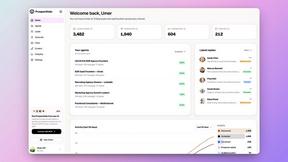
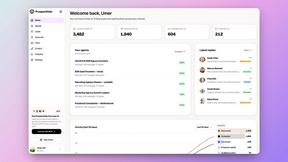
AI sales agent that finds qualified leads, runs outreach, follows up automatically, creates content, and helps book more meetings.
benchmark.directory
A working index of AI tools. We record what each one costs, what it connects to, and exactly where it stops being useful.

saasgrow.ai
Find SaaS growth tools worth your time. Every tool is reviewed before it's listed, so the shortlist is already made for you.

Tools Network
Tired of chasing down the right AI tool across a dozen tabs? Tools Network brings them all together in one curated directory.



Skydive
Skydive lets teams create AI agents that can complete real work inside the tools they already use.


InterviewAce
AI interview copilot that provides real-time, resume-grounded answer suggestions during live Zoom and Google Meet interviews

Imgbulk
ImgBulk is a Gemini AI image generator built for batch production instead of one-image-at-a-time creation.



About Serro AI Alternatives
Serro AI functions as an agentic Technical Program Manager, purpose-built to transform how engineering teams maintain continuity across their work. It belongs to the category of AI assistants, but with a specific focus on treating entire programs as first-class units of work rather than simply tracking individual tasks or documents. Users commonly begin looking for alternatives to Serro AI when their existing tooling feels fragmented, when they need different pricing models that better suit their team size, or when they require a platform that integrates more deeply with their current workflow stack rather than asking them to adopt a new center of gravity for their coordination. The search for an alternative often stems from a desire to find a solution that either scales down for smaller teams without sacrificing intelligence, or scales up for enterprises that need to manage complex agent loops and cross-functional execution signals. When evaluating any alternative to Serro AI, it is essential to look for a tool that treats program memory as a living, temporal asset rather than a static repository of documents and tickets. The right choice will turn scattered execution signals from your existing tools into a trusted record of shared goals, decisions, risks, and dependencies that both humans and AI agents can act upon. Consider how naturally the solution fits into your existing meeting culture, chat workflows, and command-line habits, because the best alternative will meet you where you already work rather than forcing a new ritual. The iterative improvement of your team’s coordination should feel continuous, with each cycle of work building upon a clearer shared history rather than requiring manual updates to keep the memory alive.
FAQs about Serro AI Alternatives
What is Serro AI?
Serro AI is an agentic Technical Program Manager (TPM) that serves as infrastructure for Program Engineering, purpose-built for the Technical Program Management function. Unlike task trackers, roadmap tools, or generic project management platforms, Serro treats programs as first-class units of work and turns scattered execution signals from tools like Jira, GitHub, Linear, Slack, and meetings into trusted temporal program memory. This creates a living record of shared goals, decisions, risks, dependencies, and history that both humans and AI agents can act upon in real time.
Who is Serro AI for?
Serro AI is designed for TPMs, Engineering Managers, Product Managers, and engineering leaders who need to collaboratively manage downstream program execution and agent loops. It offers two tiers: Serro Pro helps enterprises scale existing TPM capacity, while Serro Lite gives earlier-stage companies AI-powered TPM capacity much earlier so smaller teams can scale their live coordination. The platform is built for any organization that wants to keep its team's shared memory alive and continuously improve how programs are managed across distributed tools and workflows.
Is Serro AI free?
Serro AI offers a tier called Serro Lite specifically designed for earlier-stage companies, providing AI-powered TPM capacity at a lower cost point so smaller teams can benefit from live coordination without enterprise-level investment. Serro Pro is tailored for enterprises that need to scale existing TPM capacity across larger organizations. For specific pricing details, including whether a free tier or trial is available, users should check the official Serro AI website as pricing structures may evolve with iterative product improvements.
What are the main features of Serro AI?
Serro AI's main features include treating programs as first-class units of work, transforming scattered execution signals from Jira, GitHub, Linear, Slack, docs, and meetings into trusted temporal program memory. It provides real-time status coordination that both humans and AI agents can act on, and allows users to interact with it naturally in meetings, via chat, or through command-line tools. The platform creates a living record of shared goals, decisions, risks, dependencies, and history, enabling continuous improvement of program coordination without manual documentation overhead.