
Antwork vs MemMachine
Side-by-side comparison to help you choose the right product.

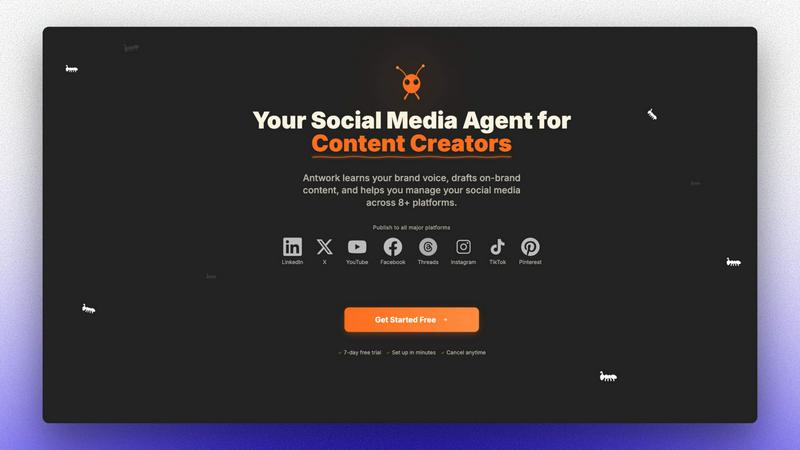
Antwork learns your brand voice and creates on-brand content for all your social platforms.
Last updated: March 4, 2026

MemMachine
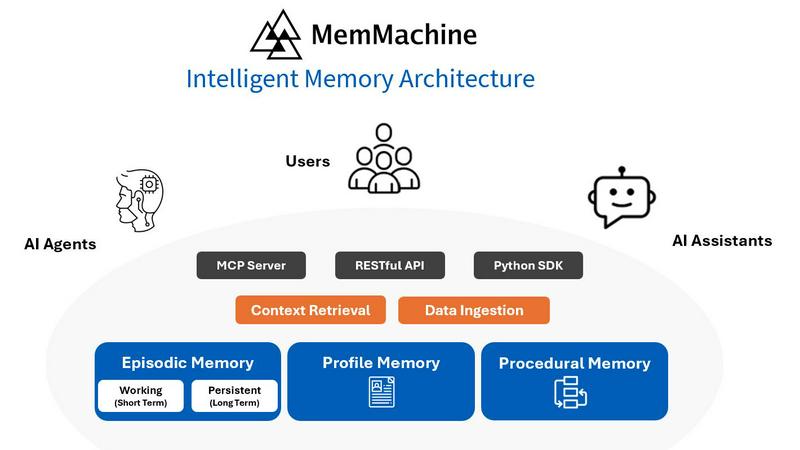
MemMachine gives AI agents lasting memory to learn and personalize with every interaction.
Last updated: February 28, 2026
Visual Comparison
Antwork
MemMachine
Feature Comparison
Antwork
Brand Voice Learning Engine
Antwork's core intelligence lies in its ability to learn your brand dynamically. It doesn't rely on a static, one-time questionnaire. Instead, it ingests data from your website, active social profiles, and the performance of past posts. This continuous feedback loop allows it to deeply understand your terminology, style, and the nuances of your communication, ensuring the AI's output evolves and improves alongside your brand, maintaining authentic consistency.
Conversational AI Agent
Interact with Antwork through a natural chat interface where you can command it in plain language. Ask it to draft a LinkedIn post about a new feature, plan a content calendar for the next quarter, research trending industry topics, generate a branded image, or analyze your post performance. The agent uses its deep knowledge of your brand to execute these tasks, making sophisticated social media management as simple as having a conversation with a knowledgeable team member.
Cross-Platform Adaptive Composer
The compose workflow allows you to create a single piece of core content, which Antwork then intelligently adapts for each specific social platform. It automatically adjusts post length, tone, hashtags, and formatting to match the best practices of LinkedIn, X, Instagram, and others. This feature includes media uploads, a visual content calendar for scheduling, and the ability to review and edit platform-specific variants before publishing, saving immense time while maximizing reach.
Multi-Brand Workspaces for Teams
Built for agencies and organizations managing multiple clients or brands, this feature allows you to create separate, isolated workspaces. Each workspace maintains its own distinct brand DNA, social account connections, and content calendar. You can invite team members with role-based permissions, set up client approval workflows, and manage everything from a centralized dashboard, streamlining collaboration and ensuring brand integrity across all accounts.
MemMachine
Persistent Cross-Session Memory
MemMachine's core capability is its persistent memory layer that does not reset at the end of a session. It securely stores user data, conversation history, and learned preferences, making them instantly available for recall in future interactions. This creates a seamless, continuous experience where the AI remembers past contexts, eliminating frustrating repetitions and building a coherent, long-term interaction history that forms the basis for true personalization.
Dynamic User Profile Building
The system automatically constructs and continuously refines sophisticated user profiles by aggregating data from all interactions. It goes beyond simple facts, capturing patterns, preferences, dislikes, and behavioral nuances. This evolving profile allows AI agents to anticipate needs and tailor responses with remarkable precision, transforming a generic assistant into one that feels uniquely attuned to the individual user's world.
Multi-Agent & Multi-LLM Memory Orchestration
MemMachine's memory layer is designed to persist across different AI agents and various large language models. This means a user's profile and history remain consistent and accessible whether they interact with a customer service bot, a productivity assistant, or a creative co-pilot, even if these agents are powered by different LLM backends. This unified memory ensures a cohesive and intelligent experience across an entire ecosystem of AI tools.
Advanced Memory Infrastructure
Under the hood, MemMachine combines powerful technologies like vector databases for semantic search and graph-based systems to map entity and temporal relationships. This advanced infrastructure allows for intelligent recall based on meaning and context, not just keywords. It enables the AI to make sophisticated connections between past events and current queries, delivering insights that are both relevant and deeply contextual.
Use Cases
Antwork
For Solopreneurs and Content Creators
Individual creators and solo founders can leverage Antwork as their full-time social media manager without the cost. It handles the entire workflow from learning their unique personal brand voice, to drafting and scheduling engaging content across all their platforms, to generating matching visuals. This frees up valuable time to focus on creating their core product or service while maintaining a consistent and growing online presence.
For Marketing Teams at Growing Startups
Startup marketing teams often wear many hats and need to scale their output efficiently. Antwork serves as a force multiplier, enabling small teams to plan sophisticated content strategies, conduct competitor and trend research via the AI agent, and maintain a cohesive brand voice across all channels. The smart scheduling and performance analytics help them optimize their efforts based on real data, driving efficient growth.
For Digital Marketing and Social Media Agencies
Agencies can manage multiple client accounts seamlessly within Antwork's multi-brand workspaces. They can train a unique AI agent for each client's brand, collaborate internally with assigned roles, and utilize client approval flows before publishing. This structure ensures scalable service delivery, consistent quality that aligns with each client's identity, and transparent collaboration, all from a single platform.
For Community Managers
Community managers responsible for engagement and brand loyalty benefit from Antwork's ability to produce a high volume of on-brand content that resonates with their specific audience. The AI's learning from performance data means it gets better at suggesting topics and tones that drive interaction. The unified calendar and cross-posting capabilities make it easy to maintain a consistent posting rhythm across all community touchpoints.
MemMachine
Personalized Healthcare Assistants
Transform healthcare AI from a sterile FAQ tool into a compassionate, proactive partner. An agent powered by MemMachine can remember a patient's medical history, appointment preferences, medication side effects, and even personal challenges like difficulty with fasting. This allows it to schedule appointments thoughtfully, offer tailored preparation advice, and provide support that demonstrates genuine empathy and understanding, significantly improving patient engagement and care.
Context-Aware Customer Support
Elevate customer support bots beyond scripted responses. With MemMachine, support agents can recall a user's entire interaction history, past issues, resolved solutions, and product preferences. This enables them to handle complex, multi-session inquiries without asking the customer to repeat information, leading to faster resolutions, higher satisfaction, and a feeling of being valued and remembered by the brand.
Intelligent Productivity & Coaching Agents
Build AI sparring partners and coaches that develop a real relationship with the user. By remembering a user's goals, past decisions, writing style, blind spots, and feedback from previous sessions, these agents can offer increasingly relevant challenges, critiques, and guidance. They evolve from simple tools into distributed advisory partners that provide consistently improving, personalized support for professional and personal growth.
Adaptive Creative & Content Collaboration
Enhance creative AI tools for writing, design, and ideation. MemMachine allows these assistants to learn a user's unique voice, preferred tones, recurring themes, and rejected ideas. This memory enables the AI to suggest content that aligns with the user's established style, help refine ongoing projects with full context, and generate new ideas that feel like a natural extension of the user's own creative process, fostering a truly collaborative partnership.
Overview
About Antwork
Antwork is not just another social media scheduler; it is your dedicated AI social media agent, engineered to understand and embody your unique brand identity. In under 30 seconds, it learns your brand's voice, tone, and audience by analyzing your website and connected social profiles. This foundational learning creates a dynamic brand DNA that Antwork uses to draft authentic, on-brand posts, adapt content for each platform's nuances, and manage publishing across LinkedIn, X, Instagram, Facebook, YouTube, TikTok, Threads, and Pinterest. Designed for creators, growing startups, and agencies alike, Antwork replaces a fragmented toolkit with a single, intelligent assistant. Its core value proposition is cyclical and iterative: it continuously learns from your content's performance and audience engagement, perpetually refining its understanding to ensure every piece of content it helps create sounds unmistakably like you, driving consistent and authentic community growth.
About MemMachine
MemMachine is the foundational open-source memory layer engineered to transform static AI applications into intelligent, evolving partners. It solves the core limitation of conventional AI: forgetfulness. By providing a persistent, sophisticated memory system, MemMachine allows AI agents and applications to learn, store, and recall user data, preferences, and interaction history across multiple sessions, agents, and underlying large language models (LLMs). This continuous learning cycle builds dynamic, detailed user profiles that grow richer with every interaction. The result is a paradigm shift from transactional question-and-answer bots to context-aware assistants that deliver profoundly personalized and meaningful experiences. Designed for developers and innovative engineering teams at the forefront of the AI revolution, MemMachine abstracts away the immense complexity of building a memory infrastructure while offering the flexibility to integrate its powerful components independently. It is the key to building AI that doesn't just respond, but understands and improves iteratively over time, forging lasting relationships between software and user.
Frequently Asked Questions
Antwork FAQ
How does Antwork learn my brand voice?
Antwork uses a multi-source, iterative learning process. Initially, it analyzes your website and connected social media profiles to understand your existing content, tone, and audience. Crucially, it continues to learn by analyzing the engagement and performance data from the posts it helps you publish. This creates a continuous feedback loop, allowing the AI to perpetually refine its understanding and improve the brand authenticity of its future suggestions and drafts.
What platforms does Antwork support for publishing?
Antwork supports direct publishing and scheduling to all major social media platforms, including LinkedIn, X (formerly Twitter), Facebook, Instagram, YouTube, TikTok, Threads, and Pinterest. Its cross-posting feature allows you to create one core message, and it will automatically adapt the format, text length, and hashtags to be optimal for each specific platform's audience and best practices.
What are AI credits and how are they used?
AI credits are the currency for Antwork's generative AI features. Roughly, one credit is consumed for one AI-generated social media post draft. Credits are also used for other AI-powered tasks like generating on-brand images within the chat, conducting web research for trends, or analyzing post performance. Each pricing plan includes a monthly allotment of credits, and you only pay for the AI capabilities you actively use.
Can I manage multiple brands or client accounts?
Yes, Antwork is built for multi-brand management, especially in its Growth, Business, and Agency plans. These plans include multiple workspaces. Each workspace is completely separate and can be trained on a unique brand identity (Brand DNA), have its own set of connected social accounts, content calendar, and team members. This is ideal for agencies, freelancers with multiple clients, or companies managing distinct product lines.
MemMachine FAQ
What exactly is MemMachine?
MemMachine is an open-source software layer specifically designed to add persistent, learning memory to AI agents and applications. It is not an AI model itself, but the infrastructure that allows AI systems to remember user interactions across sessions, build detailed profiles, and use that historical context to deliver personalized and intelligent responses, transforming them from forgetful tools into evolving assistants.
How does MemMachine handle privacy and user data?
As an open-source solution, MemMachine provides transparency and control. Developers and teams implement MemMachine within their own infrastructure and data governance policies. This means they retain full ownership and control over all user data stored in the memory layer, allowing them to ensure compliance with relevant privacy regulations (like GDPR or CCPA) and implement their own security, encryption, and data retention protocols.
Can I use MemMachine with any Large Language Model (LLM)?
Yes, one of MemMachine's key design principles is LLM-agnosticism. Its memory layer is separate from the AI model used for generating responses. This means you can integrate MemMachine with OpenAI's GPT models, Anthropic's Claude, open-source models like Llama, or any other LLM. The memory persists and provides context regardless of the underlying model, offering great flexibility in your tech stack.
Is MemMachine suitable for small projects or only large teams?
MemMachine is built for scalability and flexibility, making it suitable for projects of all sizes. Its open-source nature allows individual developers and small teams to start integrating powerful memory features without significant cost. The architecture allows you to use its components independently, so you can start with core memory functions and gradually adopt more advanced features as your application and needs grow iteratively.
Alternatives
Antwork Alternatives
Antwork is an AI-powered social media management platform that automates the creation and distribution of on-brand content. It belongs to the category of marketing automation tools designed to streamline content workflows across multiple social networks. Users often seek alternatives for various reasons, including budget constraints, specific feature requirements not met by their current tool, or the need to support different social platforms. When evaluating other options, it's crucial to consider your core needs. Look for a solution that aligns with your content volume, team size, and the specific platforms where your audience is most active. The ideal tool should integrate smoothly into your existing workflow, offering a balance of powerful automation and the nuanced control needed to maintain your unique brand voice. The search for the right platform is a process of continuous refinement. As your brand evolves, so too will your requirements, making it essential to choose a tool that can adapt and grow with you. Prioritize solutions that offer iterative improvements and a commitment to development, ensuring your marketing stack remains effective over the long term.
MemMachine Alternatives
MemMachine is an open-source memory layer for AI agents, designed to give them persistent, learning memory across sessions. This places it in the category of AI development tools focused on personalization and long-term context. Developers often explore alternatives for various reasons. These can include specific budget constraints, the need for different integration capabilities with their existing tech stack, or requirements for particular deployment models like fully managed cloud services versus self-hosted solutions. When evaluating options, consider core capabilities like the robustness of the memory system, ease of integration with your preferred AI models, deployment flexibility, and the overall philosophy of the project, such as open-source versus proprietary. The goal is to find a solution that evolves with your project's needs.