
JSON to Excel vs qtrl.ai
Side-by-side comparison to help you choose the right product.

JSON to Excel
Instantly convert JSON to Excel in your browser, evolving your data workflow with every use.
Last updated: March 1, 2026

qtrl.ai
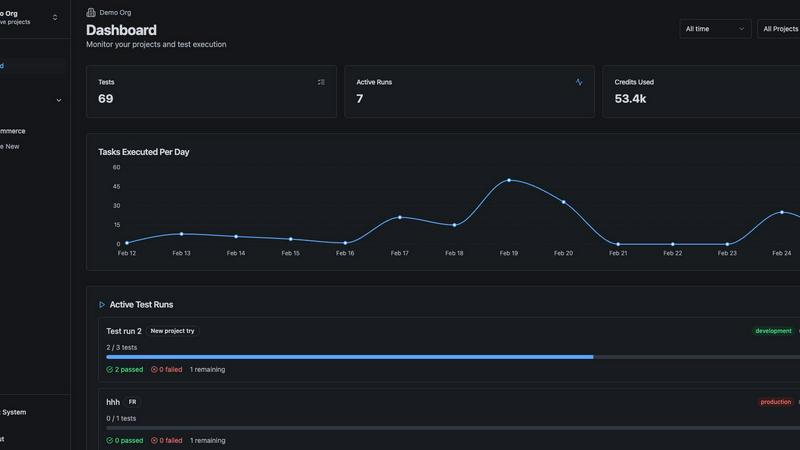
qtrl.ai empowers QA teams to scale testing with AI while maintaining control, governance, and seamless integration.
Last updated: March 4, 2026
Visual Comparison
JSON to Excel

qtrl.ai
Feature Comparison
JSON to Excel
Client-Side Processing & Uncompromising Privacy
Security is the foundational layer of every conversion cycle. Unlike traditional online tools that require uploading your sensitive files to remote servers, our JSON to Excel engine operates entirely within your web browser. This means your financial records, personal information, and proprietary business data never leave your device, remaining under your exclusive control at all times. This local processing ensures compliance with strict data protection regulations and represents a continuous improvement in secure data handling, turning each session into a trusted, private iteration.
Instantaneous Browser-Based Conversion
Time is the most valuable resource in any iterative workflow. By leveraging the full processing power of your local machine and bypassing network latencies and server queues, our tool delivers immediate results. This allows for the rapid transformation of large, complex datasets that would typically time out on server-based alternatives. The cycle of waiting is broken, replaced by a fluid, instantaneous conversion process that fuels faster analysis and decision-making, embodying speed as a core tenet of improvement.
Intelligent Parsing for Complex Structures
Raw JSON data is rarely perfectly flat; it contains nested arrays, objects, and varying schemas. Our converter employs sophisticated algorithms designed to handle this complexity gracefully within each iterative conversion. It automatically detects headers, intelligently flattens nested structures where appropriate, and ensures every data point finds its correct cell in the resulting spreadsheet. This intelligent automation reduces manual cleanup, delivering a polished, analysis-ready output that improves with every use.
Universal XLSX Format Compatibility
To ensure seamless integration into any downstream workflow, the tool exports directly to the industry-standard XLSX format. This guarantees universal compatibility across all major platforms and software, including Microsoft Excel, Google Sheets, LibreOffice, and Apple Numbers. By providing a universally accessible output, the tool closes the loop on compatibility issues, enabling a continuous, unbroken cycle of data sharing, reporting, and collaboration across Windows, macOS, and Linux environments.
qtrl.ai
Autonomous QA Agents
qtrl.ai's autonomous QA agents execute testing instructions on demand or continuously, enabling teams to run tests across various environments at scale. This feature ensures real browser execution rather than simulations, maintaining the integrity of test results and operational efficiency.
Enterprise-Grade Test Management
With comprehensive capabilities for centralized test case management, qtrl.ai provides full traceability and audit trails. It supports both manual and automated workflows, making it an ideal solution for organizations that prioritize compliance and need robust oversight in their QA processes.
Progressive Automation
Starting with human-written test instructions, qtrl.ai allows teams to enhance their automation gradually. As teams become more comfortable, they can transition to AI-generated tests. The platform intelligently suggests new tests based on coverage gaps, ensuring that quality assurance evolves alongside the application.
Adaptive Memory
qtrl.ai builds a living knowledge base of your application through its adaptive memory feature. This allows the platform to learn from exploration, test execution, and encountered issues, ultimately powering smarter and more context-aware test generation that improves with each interaction.
Use Cases
JSON to Excel
API Payload Review & Debugging
Modern development relies on constant iteration with REST and GraphQL APIs. Developers can instantly convert JSON API responses into Excel spreadsheets to visually inspect payload structures, debug data issues, and validate correctness. This cyclical process of request, conversion, and review accelerates debugging cycles, turning opaque data streams into clear, organized formats for continuous improvement in API integration and reliability.
Data Science & Analytics Dataset Preparation
Data scientists often receive data in JSON format from various sources like web scrapers or NoSQL databases. Converting this JSON to Excel provides a familiar, powerful environment for cleaning, filtering, and performing preliminary analysis. This step is a critical iteration in the data pipeline, transforming raw, nested data into a structured dataset ready for statistical modeling and visualization, thereby refining the path to insight.
Business Reporting & Stakeholder Presentations
Business analysts frequently need to translate technical JSON data from databases or analytics platforms into reports for non-technical stakeholders. This converter bridges that gap efficiently, turning complex data into clear, formatted Excel spreadsheets perfect for creating charts, pivot tables, and executive summaries. It fuels an iterative reporting cycle where data can be quickly refreshed and presented, driving informed decision-making.
System Configuration & Data Migration Auditing
System administrators and DevOps engineers manage configurations and data often stored in JSON files. Converting these files to Excel allows for easy auditing, comparison during migration projects, and human-friendly editing before converting back. This use case represents a vital cycle of audit, improve, and deploy, ensuring system integrity and smooth transitions during updates or platform changes.
qtrl.ai
Product-Led Engineering Teams
For product-led engineering teams, qtrl.ai provides the tools to streamline testing processes, enabling faster releases without sacrificing quality. Teams can manage their test cases effectively while leveraging automation to enhance efficiency.
QA Teams Scaling Beyond Manual Testing
QA teams transitioning from manual testing to automated processes can utilize qtrl.ai to scale their efforts. The platform facilitates a gradual shift, allowing teams to maintain control while adopting new technologies at their own pace.
Companies Modernizing Legacy QA Workflows
Organizations looking to modernize their legacy QA workflows can benefit from qtrl.ai's robust features. The platform integrates seamlessly with existing tools and processes, providing a pathway to improved testing and quality assurance practices.
Enterprises Requiring Governance and Traceability
For enterprises that must adhere to strict governance and compliance standards, qtrl.ai ensures full visibility and traceability across all testing activities. This makes it easier to maintain audit trails and meet regulatory requirements while scaling QA efforts.
Overview
About JSON to Excel
In the modern data ecosystem, the journey from raw information to actionable insight is a continuous cycle of refinement and improvement. JSON to Excel stands at the heart of this iterative process, offering a sophisticated, browser-based converter designed to fluidly transform complex JSON structures into organized, human-readable Excel spreadsheets. This tool is engineered for the dynamic workflows of developers parsing intricate API responses, data scientists preparing datasets for analysis, business analysts generating reports, and administrators managing system migrations. Its core mission is to bridge the persistent gap between machine-readable data and human-centric analysis, turning nested JSON—the lingua franca of the web—into the universally compatible XLSX format. By championing a relentless focus on speed, uncompromising privacy, and intelligent automation, JSON to Excel ensures that each conversion is not merely a task completed but a definitive step forward in a more efficient and secure data handling process. Operating entirely within your browser, it eliminates the need for installations or risky server uploads, embodying the principle of continuous improvement in every operation and empowering users to evolve their data workflows seamlessly.
About qtrl.ai
qtrl.ai is a cutting-edge quality assurance platform tailored for software development teams seeking to enhance their testing processes without compromising control or governance. This innovative tool merges robust test management capabilities with intelligent AI-driven automation, creating a centralized hub for organizing test cases, planning test runs, and tracking quality metrics through real-time dashboards. qtrl.ai's architecture is designed to provide clear visibility into testing progress, pass rates, and potential risk areas, making it invaluable for engineering leads and QA managers alike. Unlike traditional automation tools that can be brittle and complex, qtrl.ai offers a progressive transition from manual to automated testing, ensuring teams can scale their QA efforts at their own pace. By leveraging qtrl.ai, product-led engineering teams, QA groups moving beyond manual processes, and enterprises needing strict compliance can experience a smoother, more efficient path to quality assurance.
Frequently Asked Questions
JSON to Excel FAQ
Is my data secure when using the JSON to Excel converter?
Absolutely. Security is paramount in our design philosophy. The entire conversion process happens locally within your web browser. Your JSON data is never uploaded to any external server or stored on our systems. This client-side processing ensures your sensitive and proprietary information remains entirely on your computer, offering a private and secure conversion cycle with every use.
What are the limits on file size or complexity?
The tool is designed to handle substantial datasets by utilizing your local computer's processing power. While there is no strict server-imposed limit, extremely large files (e.g., hundreds of megabytes) may be constrained by your browser's available memory. For optimal performance in our iterative processing model, we recommend testing with your specific data, as the tool continuously improves to handle more complex structures efficiently.
Does the tool support nested JSON objects and arrays?
Yes, intelligent handling of nested structures is a core feature. The converter's algorithms are designed to parse complex, hierarchical JSON data gracefully. It automatically flattens nested objects and arrays into a coherent table structure within the Excel spreadsheet, ensuring all data is represented accurately and is ready for analysis, which simplifies each step in your data refinement cycle.
What formats can I output besides Excel (.xlsx)?
While the primary and most powerful output is the universal XLSX format for Excel, the tool also supports conversion to other common tabular formats to fit various stages of your data workflow. This includes CSV (Comma-Separated Values), TSV (Tab-Separated Values), SQL insert statements, and Markdown tables, providing flexible options for different iterative processes in development, documentation, and database management.
qtrl.ai FAQ
What makes qtrl.ai different from traditional QA tools?
qtrl.ai stands apart with its combination of enterprise-grade test management and intelligent AI automation. It allows teams to scale their testing efforts progressively while maintaining control, unlike traditional tools that can be brittle and complex.
How does qtrl.ai support compliance and auditability?
qtrl.ai is designed with governance in mind, offering full traceability and audit trails for all test cases and runs. This ensures that enterprises can easily meet compliance requirements and maintain oversight throughout the QA process.
Can teams start with manual testing and transition to automation?
Yes, qtrl.ai supports a progressive approach to testing. Teams can begin with manual test management and gradually adopt AI-generated tests when they feel ready, ensuring a smooth transition without overwhelming changes.
How does the adaptive memory feature work?
The adaptive memory feature in qtrl.ai builds a continuous knowledge base of your application by learning from interactions, test executions, and issues encountered. This improves the platform's ability to generate context-aware tests, making it more effective over time.
Alternatives
JSON to Excel Alternatives
JSON to Excel is a browser-based tool in the tech tools category, designed to instantly transform complex JSON data into organized Excel spreadsheets. It operates on a principle of continuous improvement, focusing on local processing for speed and security. Users often explore alternatives to find a solution that better aligns with their evolving workflow needs. This search can be driven by factors like specific feature requirements, budget considerations, the need for different platform access, or integration with other systems. When evaluating any tool, consider its core philosophy regarding data privacy, its approach to handling complex nested data, and how it integrates into your iterative processes. The right choice should not just perform a task but should advance your overall data handling efficiency and security with each use.
qtrl.ai Alternatives
qtrl.ai is a cutting-edge quality assurance platform that empowers software teams to enhance their testing processes through the integration of AI agents while maintaining full control and governance. Positioned within the automation and dev tools category, qtrl.ai is particularly valuable for QA teams looking to streamline their testing workflows without compromising on oversight or compliance. Users often seek alternatives to qtrl.ai for various reasons, such as pricing considerations, specific feature requirements, or platform compatibility issues. When exploring alternatives, it's essential to evaluate factors such as the flexibility of automation options, the ease of integration with existing tools, and the overall user experience. Additionally, look for solutions that offer robust test management capabilities alongside effective AI support, ensuring that the chosen platform aligns with your team's unique needs and goals. Finding the right alternative can significantly influence your quality assurance strategy and drive continuous improvement.