
evenus vs OpenMark AI
Side-by-side comparison to help you choose the right product.

AI reveals relationship loads for true fairness.

OpenMark AI continuously benchmarks over 100 LLMs on your actual task to find the best model for cost, speed, and quality.
Last updated: March 26, 2026
Visual Comparison
evenus
OpenMark AI
Overview
About evenus
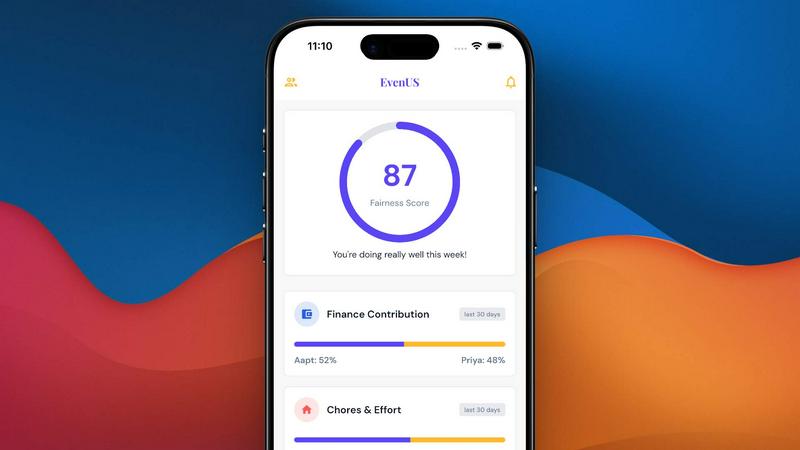
EvenUS is a fairness engine for couples that combines finances, chores, and the invisible mental load into one unified dashboard. It provides AI-powered insights, a live Household Harmony Score, income-aware expense splits, effort scoring, gentle reminders, and actionable tips to rebalance without blame or arguments.
Unlike traditional spreadsheets or basic chore apps, EvenUS treats money, tasks, and cognitive labor as an interconnected system, helping couples (married or not) reduce resentment, save time, and strengthen their relationship. Features include real-time syncing between partners, mental load tracking, fairness reports with Effort Balance and Financial Balance scores, Zone Ownership, automated reminders, and seamless integrations (calendars, banks, grocery apps).
Launching soon on iOS & Android with a generous free tier.
About OpenMark AI
OpenMark AI is a powerful web application designed to end the guesswork in selecting large language models (LLMs) for production applications. It provides a comprehensive, task-level benchmarking platform where developers and product teams can describe their specific use case in plain language and run the same prompts against a vast catalog of over 100 models in a single, unified session. The core value proposition is delivering actionable, real-world data for pre-deployment decisions. Instead of relying on marketing claims or single, lucky outputs, OpenMark AI shows you performance variance, scored quality, real API latency, and actual cost per request across repeat runs. This cyclical, iterative approach to testing ensures you can continuously improve your model selection based on hard evidence, not hunches. Built for efficiency, it uses a hosted credit system, eliminating the need to manage and configure separate API keys for every provider like OpenAI, Anthropic, or Google. The platform is designed for those who prioritize cost efficiency—finding the optimal balance of quality relative to price—and need confidence that a model will deliver consistent, stable results every time it's called in a live feature.