
Amor vs CommuteHub
Side-by-side comparison to help you choose the right product.

Amor
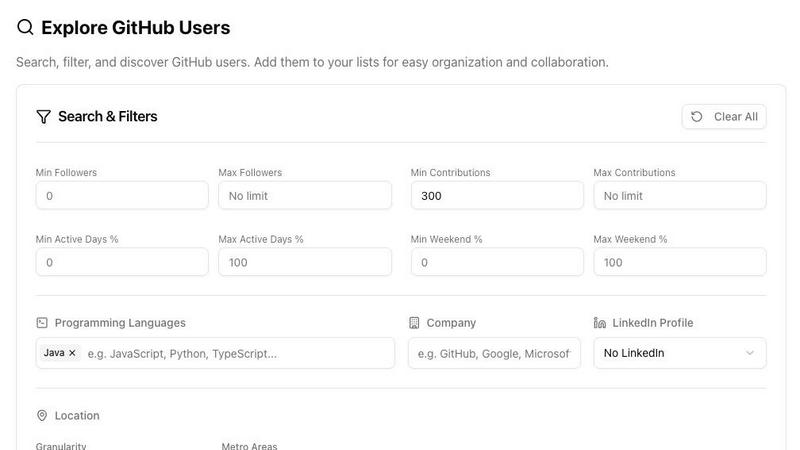
Amor continuously refines your search to instantly source the top one percent of GitHub engineers.
Last updated: March 1, 2026

CommuteHub
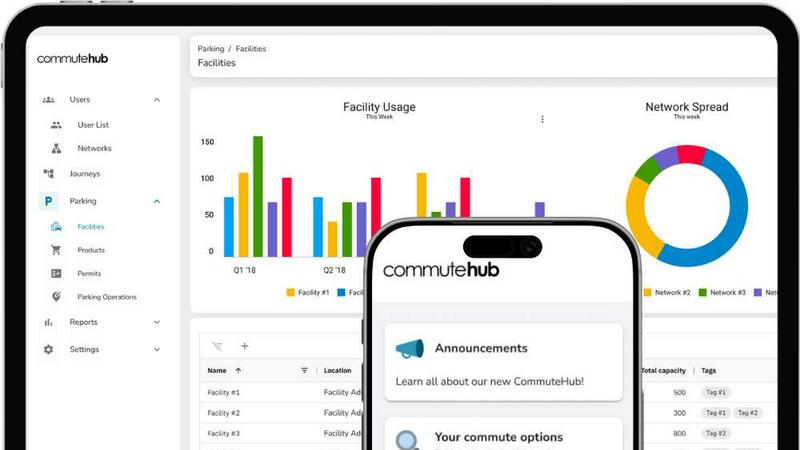
CommuteHub continuously evolves to simplify and optimize every commute and parking program.
Last updated: February 28, 2026
Visual Comparison
Amor
CommuteHub
Feature Comparison
Amor
Top 1% Engineer Identification
Amor's foundational feature is its systematic, data-backed method for isolating the most active and impactful engineers on GitHub. The platform tracks over 100,000 developers with more than 500 contributions in the last year, applying advanced filters to surface individuals based on commit frequency, project impact, and repository stars. This continuous sifting of massive data ensures you are not just finding engineers, but are consistently presented with the proven top performers, refining your candidate pool with each use to focus only on exceptional talent.
Smart Location Data & Advanced Filtering
GitHub location data is notoriously noisy. Amor applies intelligent cleaning algorithms to parse and standardize location information, allowing for precise searches by city, region, or country. This is part of a broader suite of advanced filters that let you drill down by programming languages, contribution frequency, and specific repository contributions (e.g., Next.js, React). This feature embodies iterative refinement, saving hours of manual screening by letting you build and perfect your search criteria to instantly generate qualified, geographically relevant candidate lists.
Easy-to-Skim Profiles & Repository Insights
Amor transforms raw GitHub activity into immediately digestible intelligence. Each profile features an automatic summary of a developer's technical interests, skills, and activity patterns. You can quickly understand the types of projects they build and star, gaining a clear snapshot of their passions and expertise. This continuous distillation of complex data into simple insights allows for faster, more accurate profile evaluation, enabling you to iterate through candidates efficiently without missing key details.
Seamless Ashby Export & Collaboration Tools
Amor integrates directly into the hiring workflow with one-click export to Ashby's CSV import format. Profiles are auto-enriched with emails from commits, LinkedIn URLs, and smart tags. Furthermore, built-in collaboration tools like shared Candidate Lists and profile comments allow teams to iterate on feedback and insights collectively. This creates a cycle of continuous improvement in the hiring process, reducing time-to-hire by streamlining handoffs and enabling faster, unified decision-making.
CommuteHub
Advanced Parking & Mobility Management
CommuteHub seamlessly integrates advanced parking management with broader transportation demand management. It provides real-time parking availability, allows users to reserve spots, and manages access controls and dynamic pricing. This feature is unified with other mobility options like public transit, ride-sharing, and micromobility, creating a single hub for all commuting decisions and enabling continuous optimization of space and travel behavior.
Personalized Commute Concierge & Gamification
The platform delivers a highly personalized experience by highlighting the most relevant transportation options, benefits, and programs based on a user's location, employer, and profile. It employs research-backed gamification and rewards to motivate and celebrate sustainable travel choices, creating a frictionless and engaging experience that continuously encourages the replacement of single-occupancy vehicle trips with better alternatives.
Automated Incentive Programs & Flexible Fulfillment
CommuteHub streamlines complex program management through intelligent automation. It handles data validation, request routing, approvals, fraud detection, and participant outreach. Administrators can configure unlimited incentive types, from built-in premium rewards and cash subsidies to unique digital inventories, all managed through a flexible mobility wallet that simplifies distribution and enhances user satisfaction in an ongoing cycle of engagement.
Unmatched Insights, Analytics & Reporting
The platform collects high-quality, trusted trip data from GPS tracking, verified carpools, service integrations, and self-reported logs. This data fuels stunning interactive dashboards and maps, providing deep insights into program performance. It supports pre-configured or customized surveys for compliance and accreditation, offering a continuous feedback loop for strategic planning and demonstrable ROI on sustainability initiatives.
Use Cases
Amor
For In-House Recruiting Teams
In-house recruiters at scaling startups and tech companies use Amor to build a robust, high-quality engineering pipeline efficiently. The platform provides the data to assess both technical chops and work ethic indicators like coding consistency, helping to reduce time-to-hire without compromising on quality. It enables a continuous cycle of sourcing, evaluating, and shortlisting candidates who are proven coders, often uncovering talent invisible on traditional platforms.
For Technical Recruiting Agencies
Recruiting agencies leverage Amor to gain a competitive edge by accessing an exclusive, untapped pool of passive, high-caliber candidates. By sourcing from GitHub, they find expert senior engineers that their LinkedIn-only competitors cannot, leading to faster placements. The tool allows for rapid, iterative searching and list-building, enabling agencies to refine their sourcing strategies and deliver exceptional talent to clients more reliably.
For Engineering Managers & Tech Leads
Engineering managers use Amor to take a hands-on role in sourcing, ensuring candidates have the genuine technical expertise and project interests that align with their team's needs. The platform's insights into contribution patterns and technical summaries help managers quickly evaluate culture and skill fit, empowering them to raise their team's bar through a more informed and iterative hiring process.
For Building Diverse & Underrepresented Talent Pools
Amor facilitates proactive sourcing from underrepresented communities in tech by enabling searches based purely on verifiable contribution history and technical merit, reducing unconscious bias from traditional resume screening. Teams committed to DEI initiatives can use the platform to continuously discover and engage with highly skilled engineers from diverse backgrounds who demonstrate their abilities through their public work.
CommuteHub
Corporate Campus Commute Optimization
Large employers use CommuteHub to create a world-class commute experience for their workforce. By centralizing parking reservations, shuttle schedules, ride-matching for carpools, and subsidy management, they reduce parking congestion, lower their carbon footprint, and enhance employee satisfaction through a personalized, supportive platform that evolves with hybrid work patterns.
Public Transportation Demand Management (TDM)
Public agencies and metropolitan planning organizations deploy CommuteHub to deliver community-wide programs. The platform unifies disparate mobility services, offers public incentives for sustainable travel, and gathers crucial data on mode shift. This enables evidence-based policy making, effective reduction of regional traffic congestion, and continuous improvement of public transportation outreach.
University Mobility and Parking Management
Universities implement CommuteHub to manage complex parking logistics for students, faculty, and staff across vast campuses. The platform integrates permit sales, real-time space availability, bike-share, and transit passes into one app. Gamified challenges and rewards promote sustainable choices among the campus population, while analytics help plan infrastructure and services.
Compliance and Accreditation Reporting
Organizations pursuing sustainability certifications (like LEED or ISO 14001) leverage CommuteHub's robust data collection and reporting tools. The platform automates the logging of sustainable trips, administers required surveys, and generates detailed reports on vehicle miles avoided and CO2 reductions, turning daily commute data into auditable proof of environmental compliance and impact.
Overview
About Amor
Amor is an innovative, GitHub-first sourcing platform engineered to continuously refine and revolutionize the hunt for elite software engineering talent. It is designed for engineering managers, technical recruiters, and sourcers who are committed to an iterative, data-driven approach to hiring, moving beyond the saturated networks like LinkedIn. By leveraging sophisticated algorithms on a massive dataset of over 8 million developer profiles and 145 billion repository stars, Amor pinpoints the top 1% of engineers based on real coding activity, contribution patterns, and cleaned location data. The platform's core value proposition is its cyclical improvement of the sourcing workflow: it saves countless hours otherwise spent on manual scripts or profile sifting, provides deep, actionable insights into a candidate's technical habits and interests, and enables faster, more informed hiring decisions. This commitment to continuous enhancement ensures teams can consistently identify and engage with high-quality, often "hidden" engineers who prioritize building over networking, thereby raising the hiring bar with every search cycle.
About CommuteHub
CommuteHub by RideAmigos is the centralized, future-proof platform that powers the world's most advanced parking and transportation demand management (TDM) programs. It is designed for large organizations and public TDM entities seeking to transform fragmented mobility options into a seamless, personalized commuting experience. The platform's core value proposition lies in its ability to unify complex systems—integrating real-time parking availability, reservations, and access controls with multi-modal transportation options, subsidies, and incentives. This creates a continuous cycle of improvement: by providing users with actionable, personalized intelligence, CommuteHub influences smarter, more sustainable travel choices. These choices generate high-quality, verified data on trips and behavior, which in turn delivers unparalleled insights and analytics back to administrators. This data-driven feedback loop allows organizations to refine their programs, optimize engagement, and demonstrate tangible progress toward goals like reducing congestion, lowering carbon footprints, and ensuring compliance. CommuteHub is built to adapt and scale, ensuring that both the user experience and program management evolve intelligently alongside changing mobility needs and organizational objectives.
Frequently Asked Questions
Amor FAQ
How does Amor find engineer contact information?
Amor auto-enriches candidate profiles by programmatically extracting email addresses from their public Git commit history. This provides a direct, verified contact method that is often more reliable than searching for contact info elsewhere. The platform also surfaces associated LinkedIn and social profiles when available, giving you multiple channels for outreach.
What makes Amor better than searching on LinkedIn or GitHub directly?
Amor provides structured, filtered access to GitHub's vast data that manual searches cannot match. Instead of spending hours writing custom scripts or sifting through irrelevant profiles, Amor applies sophisticated filters (contribution frequency, location, languages) instantly across 8+ million profiles. It delivers cleaned, actionable insights and identifies consistently active "builders" who may not maintain a polished LinkedIn presence.
How current is the data on Amor?
Amor's data is continuously updated to reflect the most recent activity. The platform tracks real-time commits and contributions, ensuring that metrics like "contributions in the last year" and coding frequency are accurate and current. This commitment to fresh data means you are always evaluating candidates based on their latest work.
Can I try Amor before committing to a paid plan?
Yes, Amor offers a free tier that allows you to experience the platform with limited search results. This lets you test the advanced filtering, explore profile insights, and understand the workflow without a credit card. You can upgrade to a paid plan for unlimited access and full feature functionality when ready.
CommuteHub FAQ
What is Transportation Demand Management (TDM)?
Transportation Demand Management (TDM) is a set of strategies aimed at maximizing the efficiency of the transportation system by reducing single-occupancy vehicle travel and promoting sustainable alternatives. CommuteHub is a comprehensive TDM platform that implements these strategies through technology, personalization, and incentives, helping organizations manage parking demand and encourage walking, cycling, carpooling, and public transit use.
How does CommuteHub personalize the user experience?
CommuteHub personalizes the experience by using a user's profile information, such as work location, home address, and employer-provided benefits. It then filters and highlights the most relevant local transportation options, parking availability, subsidy programs, and rewards challenges specifically for that individual. This science-backed approach ensures users are not overwhelmed and only see choices and incentives applicable to them.
Can CommuteHub integrate with our existing systems?
Yes, CommuteHub is designed to connect with key existing systems and apps to create a seamless ecosystem. It can integrate with payroll systems for benefits, access control systems for parking gates, mobility service APIs for real-time data, and more. This "bring everything together" philosophy ensures a unified experience without requiring a complete overhaul of your current technology stack.
What kind of data and reporting does the platform provide?
CommuteHub provides deep, actionable analytics collected from verified sources like GPS-tracked trips, in-app carpool verification, and integrated mobility services. Reports and dashboards visualize metrics on program participation, mode shift, vehicle miles reduced, carbon savings, and incentive redemption. This data is fully filterable, searchable, and exportable for planning, compliance reporting, and demonstrating program success.
Alternatives
Amor Alternatives
Amor is a specialized tool in the HR and recruiting technology category, designed to help teams discover elite GitHub engineers through deep analysis of their activity and contributions. Users often explore alternatives to find a solution that better aligns with their specific budget, desired feature set, or integration needs with their existing tech stack. When evaluating different platforms, it's crucial to consider the depth and accuracy of the data, the sophistication of filtering tools, and how the platform adapts to your evolving sourcing strategy. The goal is to find a system that not only meets your current requirements but also grows and improves alongside your team's hiring processes. The ideal alternative should offer a continuous cycle of refinement, helping you iteratively hone in on the right talent. Look for a solution that provides clear, actionable insights and cleans up noisy data, enabling you to make confident, informed decisions that improve with each hiring cycle.
CommuteHub Alternatives
CommuteHub is a comprehensive parking and transportation demand management (TDM) platform within the HR & Recruiting technology category. It centralizes mobility options to help organizations and their employees make smarter, more sustainable commuting choices. Users often explore alternatives for various reasons, such as budget constraints, the need for a different feature set, or specific platform integration requirements. The search for a new solution is a natural part of the continuous improvement cycle for any organization's commute benefits program. When evaluating other platforms, consider core capabilities like real-time parking management, multimodal trip planning, and robust reporting tools. The goal is to find a system that not only meets current logistical needs but also adapts to future changes, supporting an iterative approach to reducing congestion and achieving sustainability targets.