
TinyHunt vs Wire
Side-by-side comparison to help you choose the right product.

TinyHunt
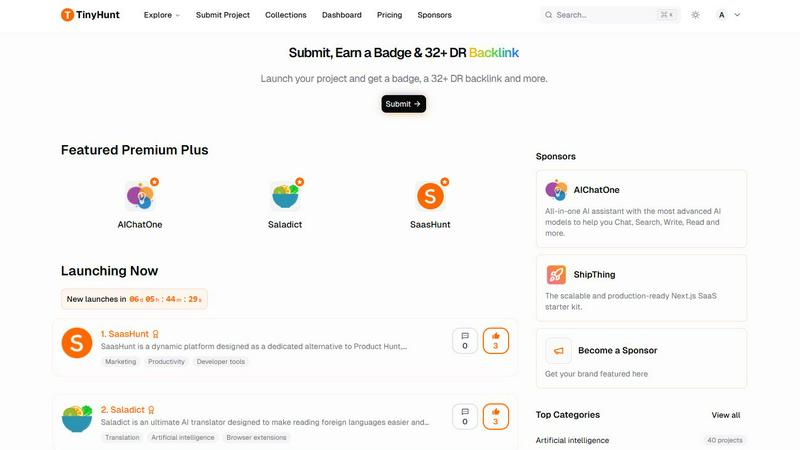
Launch your indie project with TinyHunt for visibility, backlinks, and continuous growth.
Last updated: March 1, 2026

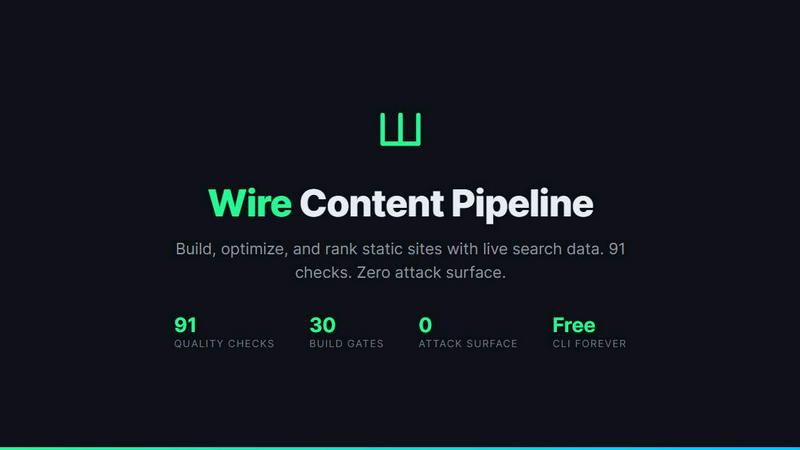
Wire continuously improves your content with AI and 91 quality checks to make it rank.
Last updated: April 4, 2026
Visual Comparison
TinyHunt
Wire
Feature Comparison
TinyHunt
Weekly Curated Launches
Every week, TinyHunt introduces a new selection of hand-picked products from indie developers and small businesses. This cyclical release schedule ensures a consistent flow of high-quality, innovative tools without overwhelming users. Each product is featured prominently for seven days, creating a sense of urgency and focus that drives concentrated exploration and community engagement around the latest innovations.
Focused Product Showcases
Each submitted project receives a dedicated, comprehensive showcase page for its feature week. These pages include detailed descriptions, key features, use cases, pricing information, and direct links. This structured format allows for deep dives into each tool, facilitating better understanding and more valuable, iterative feedback from the community compared to simple link aggregators.
Community Feedback & Discussion
TinyHunt fosters a vibrant environment for meaningful dialogue between creators and early adopters. Each product page includes a discussion area where users can ask questions, share experiences, and offer constructive feedback. This direct line of communication is invaluable for makers to refine their products in a continuous improvement cycle based on real user insights.
Valuable Launch Benefits for Makers
For developers and entrepreneurs, submitting a project to TinyHunt provides significant promotional benefits. Launching projects earn a featured badge, a valuable backlink from a domain with over 32 Domain Rating (DR) for SEO, and targeted exposure to a relevant audience of early adopters and professionals. This package is designed to iteratively boost visibility and drive qualified traffic from day one.
Wire
Autonomous Content Operations with Bot Protocol
Wire's Bot Protocol transforms your AI assistant from a simple content writer into a fully autonomous site manager. Once configured, you can give an AI agent the protocol, and it will operate your content pipeline independently. This includes conducting site audits, rewriting underperforming pages based on search data, integrating news and updates, managing internal linking strategies, and handling deployment. This feature encapsulates the principle of continuous improvement, creating a self-optimizing system that iteratively enhances your content assets without constant manual intervention, freeing you to focus on strategy.
Enforceable Quality Gates & 91+ Build Checks
Unlike dashboard tools that only warn you of problems, Wire acts as a strict quality gate for your publishing pipeline. Every piece of content must pass over 91 automated checks before it can be published. These checks cover critical areas like title length and alignment, content freshness, keyword cannibalization, thin content, broken internal links, missing citations, and detectable AI writing patterns. If a violation is found, Wire refuses to build the site, forcing issues to be resolved. This ensures no substandard content ever reaches your live environment, maintaining site integrity and search performance through rigorous, cyclical review.
Local-First, Privacy-Centric Architecture
Wire runs entirely on your local machine or within your own infrastructure. Your Google Search Console data, content drafts, and site structure never get sent to external servers. This architecture eliminates data privacy concerns, reduces latency, and removes the attack surface associated with databases and traditional CMS servers. The output is pure static HTML, which can be hosted for free on platforms like GitHub Pages. This approach gives you complete ownership and control over your entire content ecosystem, from data to deployment.
Integrated SEO & Content Optimization Engine
Wire replaces multiple point solutions by integrating core SEO functions directly into the writing and publishing workflow. It reads your actual Google Search Console data to identify genuine content gaps and underperforming pages, rather than guessing based on competitor spying. It handles keyword research, detects and resolves internal keyword cannibalization, optimizes content for target terms, and ensures proper structured data—all within the same tool that writes and builds your site. This creates a tight, iterative loop between insight, creation, and validation.
Use Cases
TinyHunt
Independent Developers Launching New Products
Indie makers and solo founders use TinyHunt as a launchpad for their new SaaS tools, apps, or digital products. The platform provides the initial visibility spike needed to gather their first users, collect actionable feedback, and build momentum. The cyclical nature of the launches encourages them to prepare and iterate based on community response, fostering continuous product improvement.
Entrepreneurs Sourcing Innovative Business Tools
Startup founders, consultants, and small business owners actively browse TinyHunt to discover under-the-radar software that can streamline their operations. They rely on the weekly curated drops to efficiently find tools for tasks like proposal generation, project management, or marketing automation, allowing them to adopt and integrate new solutions that give them a competitive edge through iterative tech adoption.
Tech Enthusiasts & Early Adopters
Individuals passionate about discovering the latest technology trends use TinyHunt as their primary source for finding novel apps and tools before they hit the mainstream. They enjoy the ritual of weekly exploration, testing new products, participating in discussions, and being part of the iterative journey of an indie product from its early stages.
Investors & Scouts Seeking Emerging Trends
Angel investors, VC scouts, and acquisition specialists monitor TinyHunt to identify promising startups and innovative product trends in their earliest, most formative stages. The platform acts as a consistent filter for quality, allowing them to observe market reception and community feedback as part of their ongoing, iterative due diligence process.
Wire
Migrating from WordPress to a Modern, Secure Stack
Teams burdened by the bloat, security vulnerabilities, and hosting costs of WordPress can use Wire to execute a full migration. Wire can ingest existing content, reformat it according to a new styleguide, run it through all quality checks, and regenerate the entire site as static HTML. This eliminates database management, reduces hosting expenses to near zero, and dramatically improves site speed and security, all while embedding robust SEO controls directly into the new publishing process for continuous upkeep.
Scaling AI-Generated Content with Consistent Quality
For organizations using AI models like Claude or ChatGPT to produce content at scale, Wire solves the critical problem of quality enforcement and brand voice consistency. By wrapping the AI in a styleguide layer, automated cleanup rules, and strict build checks, Wire ensures every output aligns with your brand's tone, meets SEO standards, and integrates properly with the rest of your site. This turns a sporadic, unpredictable AI writing session into a reliable, industrial-grade content production pipeline.
Autonomous Site Maintenance and Freshness Updates
Wire enables "set-and-forget" content maintenance for established websites. By configuring the Bot Protocol, you can automate the continuous process of auditing for broken links, refreshing stale content with new information, identifying and fixing orphaned pages, and updating internal links when pages are renamed. This use case tackles the often-overwhelming task of site upkeep, ensuring your content asset remains healthy and relevant through automated, iterative improvements.
Recovering from Google Algorithm Updates
After a traffic drop from a core algorithm update, Wire provides a systematic recovery path. It analyzes your Google Search Console data to pinpoint which pages lost traction, audits them against its 91+ quality rules (checking for title misalignment, thin content, etc.), and guides or automates the rewrite process. Instead of spending heavily on guesswork from external tools, Wire uses your own data to drive a targeted, iterative recovery campaign focused on fixing what Google actually penalized.
Overview
About TinyHunt
TinyHunt is a dynamic, curated platform dedicated to the continuous discovery and promotion of innovative tools from small businesses and independent developers. It operates as a vibrant marketplace and community, but with a distinct focus on quality and momentum over sheer volume. The platform releases a fresh, carefully selected batch of promising products each week, with each product showcased for a seven-day period. This creates a rhythm of constant, manageable exploration, encouraging users to dive deep, test new solutions, and engage in meaningful discussions about each launch. For tech enthusiasts, entrepreneurs, and professionals, TinyHunt is an essential resource for staying ahead of the curve, finding cutting-edge tools that enhance efficiency and drive growth. Simultaneously, it provides a powerful, iterative stage for indie makers and developers to gain visibility, receive targeted feedback, and drive traffic to their projects. The entire ecosystem is built on a cycle of launch, feedback, and improvement, making TinyHunt the premier destination for anyone looking to discover or share what's genuinely new and noteworthy in the world of independent innovation.
About Wire
Wire is a comprehensive content operations command-line interface (CLI) designed to replace and consolidate your entire SEO and publishing technology stack. It is built for content teams, SEO professionals, and technical marketers who are scaling content production with AI and are frustrated by the complexity, cost, and data leakage of traditional SaaS tools. Wire's core value proposition is ownership, automation, and enforceable quality. Instead of juggling separate subscriptions for tools like Ahrefs, Semrush, SurferSEO, WordPress, Yoast, and Grammarly, Wire integrates keyword research, cannibalization detection, content optimization, static site generation, quality assurance, and Google Search Console analysis into a single, local pipeline. It enforces quality through a strict, rule-based system that refuses to publish content until issues like thin content, broken links, or AI writing patterns are resolved. By operating locally, Wire ensures your proprietary content and search data never leave your machine, outputting secure, fast static HTML. It enables true autonomous content operations by providing a "Bot Protocol" that allows an AI agent to manage your site—auditing, rewriting, updating, and deploying content based on your configured rules and styleguide, creating a cyclical and iterative system of continuous improvement.
Frequently Asked Questions
TinyHunt FAQ
How do I submit my project to TinyHunt?
You can submit your project directly through the "Submit Project" link on the TinyHunt website. The process involves providing details about your product, including its description, key features, use cases, and pricing. Upon a successful launch, you will earn a featured badge and a valuable 32+ DR backlink to your site, integrating your project into the platform's cycle of discovery.
Is there a cost to submit or be featured on TinyHunt?
Based on the provided content, there is a "Submit" call-to-action that promotes earning a badge and backlink, suggesting a free submission tier. The site also lists a "Pricing" section and mentions "Featured Premium Plus," indicating there may be paid sponsorship or enhanced visibility options available for makers seeking a more prominent, iterative launch cycle.
What types of products are featured on TinyHunt?
TinyHunt focuses on innovative digital products, typically from small businesses and independent developers. This includes SaaS platforms, web apps, mobile apps, developer tools, and other software solutions. The example of QuoterAgent, an AI-powered proposal generation tool, is indicative of the practical, efficiency-focused software commonly curated on the platform.
How often is new content added to TinyHunt?
TinyHunt operates on a weekly curation cycle. A fresh selection of products is released every week, with each product being showcased for a period of seven days. This creates a dynamic, ever-refreshing environment that encourages users to return regularly to discover the latest launches and participate in ongoing discussions.
Wire FAQ
How does Wire handle my Google Search Console data?
Wire uses the official Google Search Console API to read your performance data directly. Crucially, this connection is established locally from your machine. The data is pulled into Wire's local environment for analysis to find content gaps and underperforming pages, and is never transmitted to or stored on Wire's servers. You maintain complete ownership and privacy over your search analytics throughout the entire content optimization cycle.
Can I use Wire with any static site generator?
Wire is itself a static site generator with a built-in, opinionated pipeline for content operations. It is not a plugin for other generators like Hugo or Astro. It is designed as an all-in-one replacement that tightly couples content writing, SEO optimization, quality checking, and site generation into a single, enforceable workflow. This integrated approach is key to its ability to refuse builds when quality standards are not met.
What happens when Wire "refuses to build"?
When content fails one or more of the automated quality checks (e.g., title is too long, content is too thin, broken links are detected), Wire will halt the site generation process and output a detailed error report. The build will not complete, and no changes will be deployed to your live site. You must address the specific issues highlighted in the report before Wire will proceed. This enforces quality at the system level, preventing problematic content from ever being published.
How does the styleguide work to control AI voice?
You define your brand's writing style in a simple _styleguide.md file. This file contains rules, examples, and directives about tone, sentence structure, word choice, formatting preferences, and more. Wire injects these instructions into the context of every AI content generation request. This teaches the AI model to mimic your established voice consistently across hundreds of pages, moving beyond generic AI output to create content that sounds authentically like your brand.
Alternatives
TinyHunt Alternatives
TinyHunt is a curated platform in the product discovery and launch category, designed to showcase innovative indie products weekly. It provides creators with visibility, community feedback, and a structured launch window to help their projects gain initial traction and valuable backlinks. Users often explore alternatives for various reasons. Some may seek platforms with different pricing models, a broader or more niche audience, or a submission process that better aligns with their launch timeline or marketing strategy. The specific needs of a product and its target audience are key drivers in this search. When evaluating an alternative, consider the core value it provides. Look for a platform that offers meaningful exposure to your target users, fosters genuine community engagement, and aligns with your goals for feedback and growth. The ideal choice is one that creates a synergistic relationship between your product and an interested audience, facilitating continuous improvement.
Wire Alternatives
Wire is a content operations CLI that consolidates the entire SEO and publishing workflow into a single, locally-run pipeline. It belongs to the SEO and content management category, automating tasks from keyword research to deployment while enforcing strict quality standards. Users often explore alternatives for reasons like budget constraints, specific feature requirements, or a preference for a different platform model, such as a cloud-based SaaS over a local CLI tool. When evaluating options, it's crucial to consider your core needs: the depth of SEO automation, content governance strictness, and desired hosting model. Look for a solution that aligns with your team's technical comfort and operational philosophy, ensuring it integrates seamlessly into your existing workflow for continuous content improvement. The goal is to find a system that not only consolidates tools but actively elevates your content's performance through iterative refinement.