
Octopods vs Playwriter
Side-by-side comparison to help you choose the right product.

Octopods
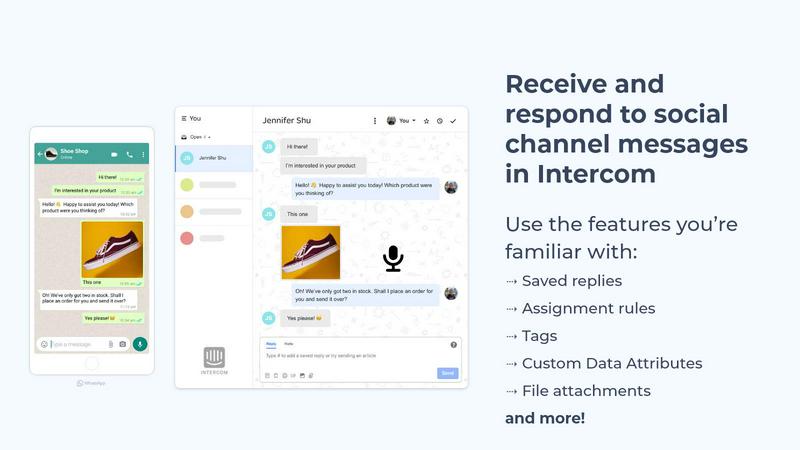
Octopods centralizes WhatsApp, Telegram, SMS, and more into Intercom or HubSpot for seamless customer conversations.
Last updated: February 27, 2026

Playwriter
Playwriter lets AI agents control your real Chrome browser with all your logins and extensions intact.
Last updated: March 18, 2026
Visual Comparison
Octopods
Playwriter

Feature Comparison
Octopods
Seamless Integration
Octopods works natively within Intercom and HubSpot, allowing all customer conversations from various messaging apps to flow into a single platform. This eliminates the need for additional tools, streamlining workflows and improving team efficiency.
Rich Media Support
With Octopods, teams can send and receive various types of rich media including images, videos, audio files, documents, and GIFs. This feature enhances the communication experience, making it more engaging and informative for customers.
Proactive Messaging
Octopods allows teams to initiate conversations through proactive outbound messaging using customizable templates. This feature ensures that your team can reach out to customers at key moments, enhancing engagement and improving response rates.
Custom Data Attributes
This feature enables teams to filter and segment conversations based on custom data attributes. By preventing duplicate contacts and enhancing customer data management, Octopods helps teams maintain organized and effective communication.
Playwriter
Your Authenticated Browser Session
Playwriter's core feature is granting AI agents access to your real Chrome browser. This eliminates the barriers of headless instances or fresh profiles. Your existing sessions, saved logins, cookies, and even installed extensions like password managers or ad blockers are all present. This not only bypasses common bot detection mechanisms but also saves significant memory since it doesn't require spawning a duplicate browser process. The agent operates in an environment that truly reflects a real user's state, making automation of logged-in workflows seamless and effective.
Full Playwright API via a Single Tool
Unlike other solutions that expose a limited, fixed set of predefined tools, Playwriter provides the entire powerful Playwright automation library through one simple execute command. This means your AI agent can write and run any Playwright code—clicking, typing, navigating, waiting for elements, extracting data, and more. This approach avoids "schema bloat" from dozens of individual tool definitions, drastically reducing context window usage in AI models and giving the agent maximum flexibility to solve complex browsing tasks without artificial constraints.
Advanced Debugging and Inspection Suite
Playwriter transforms your browser into a fully debuggable environment for AI agents. It includes a sophisticated debugger that allows setting breakpoints to pause execution, live editing of the running Playwright code for on-the-fly adjustments, and network request interception to monitor or modify API calls. This suite enables a truly iterative development cycle where the agent can profile performance, diagnose issues, and refine its approach in real-time, leading to more robust and reliable automation scripts.
Lightweight Accessibility Snapshots & Recording
Instead of relying on bulky, bandwidth-intensive full-page screenshots, Playwriter captures intelligent, structured accessibility snapshots. These snapshots are incredibly small (5-20KB) and contain the semantic structure of the page, including roles, labels, and relationships, which AI agents can parse far more efficiently than pixel data. Coupled with optional full video recording of sessions, this provides perfect context for both the AI and the human collaborator to understand what happened during an automation run, facilitating review and continuous improvement.
Use Cases
Octopods
Customer Support
Octopods enables support teams to manage customer inquiries from multiple messaging apps seamlessly. By centralizing communication within Intercom or HubSpot, teams can provide timely and consistent support without switching between platforms.
Sales Engagement
Sales teams can leverage Octopods to connect with leads on their preferred messaging channels. By keeping conversations synced, sales representatives can follow up effectively and maintain a cohesive dialogue with potential customers.
Omnichannel Experience
With Octopods, organizations can create a unified messaging experience for customers. By integrating various messaging platforms, teams can ensure that all customer interactions are tracked and managed within one cohesive workflow.
Workflow Automation
Octopods supports the automation of workflows within Intercom and HubSpot, allowing teams to utilize AI features and bots across all messaging channels. This enhances operational efficiency and ensures that customer interactions are managed swiftly.
Playwriter
AI-Powered Web Testing and QA
Enable your AI assistant to perform automated, real-user testing directly in your production-like browser environment. It can log into your web application, navigate complex user journeys, fill out forms, and validate outcomes—all while using your actual session data. This cyclical process allows for continuous test script improvement as the AI learns from each interaction, and you can step in to handle unexpected UI changes or captchas, creating a powerful human-in-the-loop testing pipeline.
Automated Data Extraction and Research
Instruct your AI agent to conduct web research or monitor websites for specific information. Because it uses your logged-in browser, it can access subscription-based content, private dashboards, or personalized feeds that are impossible for a fresh bot to reach. The agent can iteratively refine its extraction logic based on the structure of the snapshots it receives, and you can collaborate by solving paywalls or login prompts it encounters, making data gathering effortless and comprehensive.
Repetitive Task Automation and Workflows
Offload tedious, repetitive web tasks to your AI agent. This could include daily reporting from a business dashboard, routine content moderation on a platform, or automated form submissions. Playwriter allows the agent to perform these tasks within the exact browser context you use, ensuring all your preferences and settings are applied. The iterative nature means you can gradually teach the agent to handle more complex sequences and edge cases, building a more capable assistant over time.
Building and Refining AI Web Skills
Use Playwriter as a development platform for creating and honing AI "skills" for web interaction. Developers can work alongside an AI to write, test, and debug Playwright scripts in a real browser. The live code editing and debugger features are perfect for this collaborative, cyclical development process. You can rapidly prototype an automation, see exactly where it fails, adjust the strategy with the AI, and re-run it, leading to the continuous improvement of sophisticated web automation capabilities.
Overview
About Octopods
Octopods is a powerful integration tool that connects over 18 popular messaging channels including WhatsApp, Telegram, Instagram, LINE, Viber, SMS, and WeChat directly to your Intercom or HubSpot inbox. Designed for customer service, sales, and operations teams, Octopods offers a seamless experience by creating native conversations within these platforms. This eliminates the need for context switching and allows teams to utilize existing features such as tags, saved replies, assignment rules, and AI functionalities. With rich media support, proactive messaging, and automatic contact matching, Octopods ensures that your team can engage with customers efficiently and effectively. The setup process is quick, data privacy is prioritized as no conversation data is retained, and it is recognized as an official app partner of both Intercom and HubSpot, making it a reliable choice for organizations looking to enhance their customer communication strategy.
About Playwriter
Playwriter is a revolutionary open-source tool that bridges the gap between AI agents and the real web. It solves the fundamental problem where AI agents either have no browser access or are forced to use a fresh, sterile browser instance with no logins, no extensions, and instant bot detection. Instead, Playwriter gives AI agents direct, programmable control over your actual, authenticated Chrome browser session. This means the agent works within a browser that already has all your cookies, logins, installed extensions, and user profile, making its actions indistinguishable from a human user. It provides a full Playwright automation API through a simple Chrome extension and CLI, enabling sophisticated tasks like taking lightweight accessibility snapshots, debugging with breakpoints, live code editing, intercepting network requests, and recording video. Designed for a cyclical and iterative workflow, Playwriter fosters continuous improvement by allowing seamless collaboration between human and AI, where the agent handles repetitive automation and the human steps in to guide it through complex hurdles. It's built for developers, QA engineers, and power users working with AI coding assistants in Cursor, Claude Desktop, VS Code, and other MCP clients who need their agents to interact with the web as they do.
Frequently Asked Questions
Octopods FAQ
How does Octopods improve team efficiency?
Octopods centralizes communication from multiple messaging channels into one platform, reducing the need for context switching and enabling teams to leverage existing workflows and tools effectively.
Is my data safe with Octopods?
Yes, Octopods prioritizes data privacy and security. No conversation data is retained, ensuring that your interactions are secure and compliant with industry standards.
Can Octopods be integrated with other tools?
Octopods is officially integrated with Intercom and HubSpot, allowing teams to use familiar features while managing conversations from various messaging apps without needing additional tools.
How long does it take to set up Octopods?
Setting up Octopods is a quick and straightforward process, typically taking just minutes to complete, allowing teams to start engaging with customers almost immediately.
Playwriter FAQ
How does Playwriter differ from a traditional headless browser?
Traditional headless browsers or automation tools spawn a completely new, isolated browser instance with no user data, making them easily detectable as bots and unable to access logged-in services. Playwriter is fundamentally different: it connects an AI agent directly to your existing, open Chrome browser. This means it leverages your real cookies, local storage, extensions, and user agent, allowing automation that perfectly mimics human behavior and accesses all the websites you're already signed into.
Is my browsing data sent to a remote server?
No. Playwriter is designed with privacy and security as a priority. All communication happens locally on your machine. The Chrome extension connects to a small WebSocket relay running on localhost:19988. Your AI client (CLI or MCP server) also connects to this local relay. All commands and data, including CDP instructions and snapshots, flow through this local loop. No data is sent to any remote server, and no account is required.
What happens if the AI gets stuck or hits a captcha?
This is where Playwriter's collaborative, cyclical workflow shines. You are sharing the browser with the agent in real-time. If a captcha, consent wall, or unexpected modal appears, you can simply look at your browser tab and solve it yourself. Once the obstacle is cleared, you re-enable the extension for that tab, and the AI agent can continue its task from where it left off. This human-in-the-loop approach is core to handling the dynamic nature of the modern web.
Can I use Playwriter with any AI assistant?
Yes, Playwriter is compatible with any client that supports the Model Context Protocol (MCP), which is becoming a standard for AI tool integration. This includes popular coding assistants like Cursor, Claude Desktop, Windsurf, and IDEs with MCP plugins like VS Code. The provided "skill" teaches these agents how to effectively use the Playwriter API, including best practices for selectors and handling timeouts, making it a versatile tool for any MCP-enabled AI.
Alternatives
Octopods Alternatives
Octopods is a powerful integration tool that connects over 18 messaging channels, including WhatsApp, Telegram, Instagram, and SMS, directly to your Intercom or HubSpot inbox. It falls under the customer support category, designed to streamline communication by creating native conversations within these platforms, allowing teams to efficiently manage customer interactions without any context switching. Users often seek alternatives to Octopods for various reasons, such as pricing, specific feature sets, or compatibility with different platforms. When evaluating alternatives, it's essential to consider the range of supported messaging channels, ease of integration, the richness of features like media support and automation capabilities, as well as overall user experience and support options to ensure that the chosen solution meets the unique needs of your team.
Playwriter Alternatives
Playwriter is an AI-powered browser automation tool that gives AI agents direct, authenticated control over your actual Chrome session. It solves the core problem of agents working in isolated, fresh browser instances with no logins, extensions, or session history, which often triggers bot detection and limits functionality. This places it in the automation category, specifically for bridging AI and real-world web interaction. Users explore alternatives for various reasons. Some may seek different pricing models, from one-time purchases to varied subscription tiers. Others might need specific features Playwriter doesn't emphasize, require support for browsers other than Chrome, or look for a solution integrated into a different platform or workflow. The specific needs of a project or team can drive this search. When evaluating options, key considerations include the depth of browser integration and session persistence, the quality of debugging and developer tools, compatibility with your existing AI agent clients, and the overall philosophy regarding open-source licensing and security. The goal is to find a tool that not only automates but does so intelligently within the context of your established digital environment.