
Nani vs Rendery3D
Side-by-side comparison to help you choose the right product.

Nani transforms AI image generation by organizing prompts and images, enabling seamless creativity and effortless.
Last updated: February 27, 2026

Rendery3D instantly generates professional, conversion-focused product images from a single photo, continuously refining your ecommerce visuals.
Last updated: April 13, 2026
Visual Comparison
Nani
Rendery3D
Feature Comparison
Nani
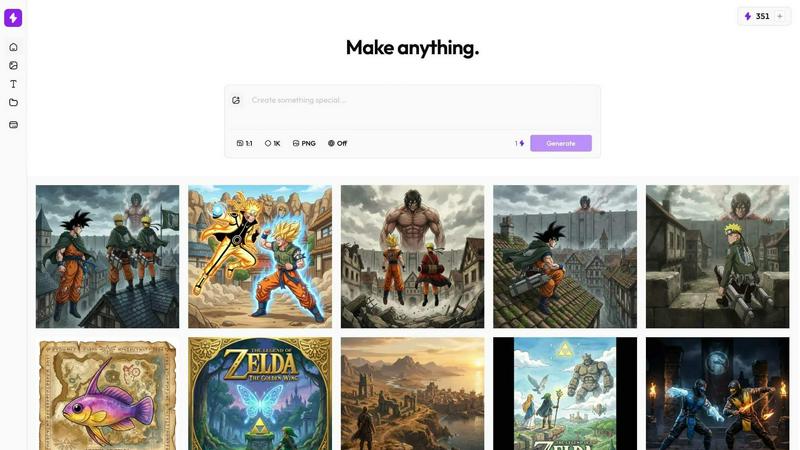
Superpowered Image Generation
Nani's image generation capabilities are powered by the advanced Nano Banana Pro technology. Users simply type in a prompt and hit generate, producing high-quality images in mere seconds. The platform supports customizable aspect ratios and resolutions, allowing for tailored creations that suit various projects without any visible watermark.
Reusable Prompt Sets
One of Nani's standout features is its ability to group images and save prompts as reusable sets. This functionality helps maintain consistent characters, styles, and workflows across multiple generations. By organizing prompts effectively, users can streamline their creative process and ensure that their work remains cohesive.
Organized Library Management
Nani excels at keeping your creative assets tidy through its organized library management system. Users can create folders, filter images by favorites, and even bulk-select images for easier management. This feature is vital for scaling workflows, as it allows users to quickly locate and utilize their most important assets.
Seamless Collaboration and Sharing
Nani promotes a collaborative environment by enabling users to drag and drop images as references and share creations through public links. This feature allows others to recreate your work in their own accounts, fostering a sense of community and collaboration while making it easy to share and receive feedback on creations.
Rendery3D
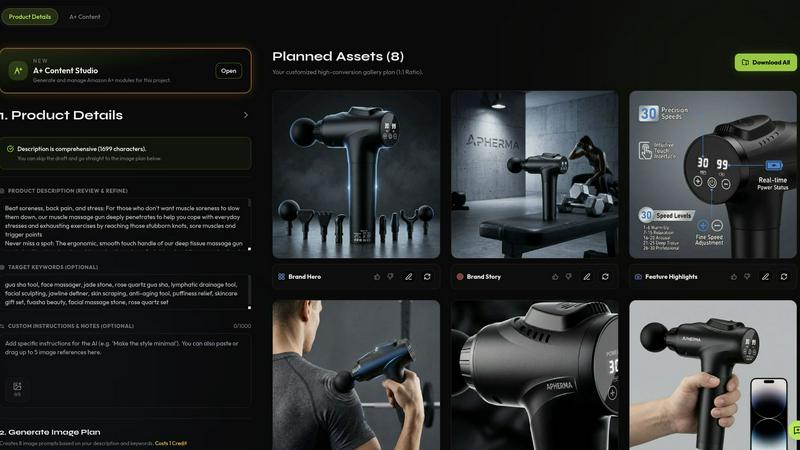
Smart Shot Planning & Auto Art Direction
This foundational feature automates the entire creative strategy. By analyzing your uploaded product photo, Rendery3D's AI automatically generates a structured, optimized 9-image shot plan tailored to your specific item. It intelligently plans hero shots, lifestyle contexts, detail close-ups, infographics, and comparison images without requiring any manual prompting or creative direction from the user. This eliminates guesswork and ensures every critical angle for conversion is covered from the start, establishing a consistent and iterative framework for all your products.
Scene Generation with 3D-Rendered Aesthetic
Unlike generic AI tools that produce flat imagery, Rendery3D is engineered to place your product into any scene with a polished, photorealistic 3D-rendered look that drives higher click-through rates. You can use text prompts for customization or let the AI handle it automatically. Crucially, the technology is logo-safe, meticulously preserving key product details, labels, and branding elements to maintain accuracy and professional integrity in every generated image.
Listing & A+ Content Copy Generator
Rendery3D extends its AI capabilities beyond visuals to create the textual components of a high-performing listing. It generates compelling, SEO-optimized titles, bullet points, keyword suggestions, and full HTML descriptions that are strategically aligned with the visual story created for the product. For Amazon sellers, it also builds Premium A+ Content modules—including hero banners, comparison charts, and brand stories—sized to exact specifications, creating a unified and persuasive brand experience.
Custom Presets & Brand Style Management
For agencies and brands requiring absolute consistency, this feature allows you to upload 6-9 competitor or reference images to extract a complete style system. Rendery3D then locks generated output to match this preset, ensuring a cohesive look across an entire catalog or client portfolio. You can also save brand colors, logos, and style preferences, which the AI applies iteratively across all projects, streamlining workflow and reinforcing brand identity with every new set of images.
Use Cases
Nani
Streamlined Content Creation for Marketers
Marketing professionals can leverage Nani to generate visuals for campaigns quickly and efficiently. By using reusable prompt sets, marketers can ensure that their branding remains consistent across all generated images, allowing for cohesive and impactful marketing materials.
Enhanced Creativity for Artists
Artists can benefit from Nani's intuitive interface and rapid image generation capabilities. With the ability to create and save prompt sets, artists can explore different styles and variations while focusing on their creative expression instead of getting bogged down by administrative tasks.
Efficient Design for Graphic Designers
Graphic designers can use Nani to generate mockups and design elements in record time. The organized library management and collaborative features allow designers to maintain a clean workspace and easily share their work with clients or team members for feedback and adjustments.
Quick Prototyping for Product Developers
Product developers can utilize Nani to create quick visual prototypes of their ideas. By generating images rapidly, they can iterate on designs and concepts without the usual overhead, facilitating a more agile development process that keeps pace with innovation.
Rendery3D
Amazon Product Launches
Accelerate time-to-market for new products. Instead of waiting weeks for a photoshoot and editing, sellers can upload a prototype or sample photo and generate a full set of Amazon-compliant, visually striking listing images and copy in minutes. This rapid, iterative cycle allows for quick testing and refinement, ensuring the listing is optimized for conversions from day one, giving new products a competitive edge immediately.
Catalog-Wide Creative Refreshes
Breath new life into an existing product catalog without the prohibitive cost of reshooting every item. Brands can systematically update old, low-quality images with a consistent, modern 3D-rendered aesthetic across hundreds of SKUs. This continuous improvement loop elevates the entire brand's storefront, potentially boosting click-through and conversion rates uniformly, which is essential for maintaining market relevance.
Ecommerce Agency Client Workflows
Agencies can dramatically scale their service delivery and profitability. Rendery3D enables the handling of multiple client projects simultaneously, delivering studio-quality assets at a fraction of the traditional time and cost. The project management tools and brand style presets ensure each client receives consistent, on-brand results, improving client satisfaction and allowing the agency to take on more business iteratively.
A/B Visual Testing & Portfolio Operations
Data-driven sellers and aggregators can use Rendery3D to quickly generate multiple visual variants (e.g., different backgrounds, compositions, or infographic styles) for rigorous A/B testing. This iterative process of create-test-optimize helps identify the highest-converting imagery with precision. For portfolio operators managing many brands, the tool standardizes quality and speeds up the asset production cycle across diverse product lines.
Overview
About Nani
Nani is an innovative workflow tool that redefines the experience of AI image generation. It is specifically tailored for individuals and professionals who engage in regular and repetitive image creation tasks, such as artists, designers, and content creators. Unlike traditional AI image tools that often focus on one-off creations, Nani streamlines the image generation process, allowing users to bypass the tedious work of rewriting prompts and sorting through extensive image feeds. Powered by Google's cutting-edge Nano Banana Pro (Gemini), Nani offers a comprehensive suite of features that enhance creativity and productivity. With a user-friendly interface, users can generate stunning images in seconds while maintaining organization through reusable prompt sets and folders. This structure encourages consistency and efficiency, enabling creators to devote more time to their artistic vision while minimizing the administrative burden.
About Rendery3D
Rendery3D is a purpose-built AI platform that revolutionizes product listing creation for the modern ecommerce seller. It is engineered specifically for Amazon sellers, DTC brands, and ecommerce agencies who need to move fast and convert at a higher rate. The platform's core mission is to eliminate the traditional bottlenecks of product photography—costly studios, lengthy photoshoots, and inconsistent results—by transforming a single product photo into a complete, conversion-optimized visual suite. This cyclical process of upload, AI analysis, generation, and refinement ensures continuous improvement in listing quality. Rendery3D delivers more than just images; it generates a structured 9-image shot plan including compliant hero shots, engaging lifestyle scenes, benefit-focused infographics, and scale comparisons, all wrapped in a premium 3D-rendered aesthetic that stands out in crowded marketplaces. Furthermore, it closes the creative loop by producing SEO-optimized listing copy and A+ Content, aligning text and visuals into a cohesive, high-converting story. The platform's iterative feedback systems, like the Automatic Feedback Loop (AFL), audit and self-correct outputs, guaranteeing professional, logo-safe, and marketplace-ready assets every time, enabling brands to scale their visual identity efficiently and effectively.
Frequently Asked Questions
Nani FAQ
How does Nani improve my workflow?
Nani enhances your workflow by streamlining the image generation process, allowing you to save reusable prompts, organize your library, and focus on creativity rather than administrative tasks.
Is there a learning curve with Nani?
No, Nani is designed with a simple and intuitive interface that requires no prior experience. Users can start creating immediately without a steep learning curve.
What are the costs associated with using Nani?
Nani offers a pay-as-you-go model, where users pay approximately 30 cents per generation for images in 1K or 2K resolution. There are no monthly fees or subscriptions, making it accessible for casual and professional users alike.
Can I collaborate with others using Nani?
Yes, Nani provides features for seamless collaboration. You can share your creations through public links, allowing others to view or recreate your work in their own accounts, fostering a collaborative environment.
Rendery3D FAQ
What kind of input photo do I need?
You only need one clean product photo on a plain background to start. Even a basic smartphone photo can work effectively. The AI analyzes this image to understand your product's shape, details, and key features. For best results, ensure the product is well-lit and in focus. The platform is designed to iteratively improve from this starting point, building a complete visual set regardless of the initial photo's simplicity.
How does Rendery3D ensure brand consistency and logo safety?
Rendery3D uses advanced AI models specifically trained for ecommerce that prioritize the accurate preservation of logos, text, and critical product details. The Automatic Feedback Loop (AFL) audits each generated image for errors before delivery. Furthermore, the Brand Styles and Custom Preset features allow you to lock in colors, styles, and compositional rules, which the AI applies consistently across all future projects, creating a continuous cycle of on-brand output.
Can I customize the AI-generated images?
Yes, you have full control. You can fine-tune any image using custom text prompts, adjust scenes, or modify elements. Alternatively, you can set up brand preferences and let the AI handle everything automatically for a hands-off, scalable workflow. This balance between automation and customization supports an iterative creative process where you can generate a base set quickly and then refine specific images as needed.
Is there a free plan or trial?
Yes, Rendery3D offers a free plan that allows you to generate your first set of listing images without requiring a credit card. This lets you experience the full workflow—from upload to download—and see the quality of the 3D-rendered outputs firsthand. Paid plans with more extensive features, higher generation limits, and advanced tools like Custom Presets start at $45 per month.
Alternatives
Nani Alternatives
Nani is an innovative workflow tool that simplifies AI image generation by organizing prompts and images into reusable sets. It belongs to the category of AI assistants designed specifically for artists, designers, and content creators who frequently engage in repetitive creative tasks. Users often seek alternatives to Nani due to varying factors such as pricing, specific feature sets, or platform compatibility. Additionally, the need for tools that cater to unique workflows or provide different methods of image generation can drive the search for alternatives. When selecting an alternative, it's essential to consider the features that align with your creative needs, such as the ability to save and reuse prompts, ease of access to reference images, and tools that facilitate visual iteration. Look for platforms that enhance your creativity while minimizing the administrative burden. An intuitive user interface and robust organizational capabilities can also play a key role in your decision-making process.
Rendery3D Alternatives
Rendery3D is a conversion-first AI visual engine designed for ecommerce brands. It belongs to the specialized category of AI-powered product photography and listing creative platforms. Its core function is to transform basic product photos into a complete suite of Amazon-compliant and conversion-optimized visuals, including hero shots, lifestyle scenes, and infographics, while also generating aligned listing copy. Users often explore alternatives for several common reasons. These can include budget constraints, the need for different feature sets like video generation or 3D modeling, or a requirement to integrate with specific ecommerce platforms beyond Amazon. Some may seek more manual creative control or solutions tailored for very high-volume enterprise operations. When evaluating an alternative, it's crucial to assess its core specialization. Look for a tool engineered specifically for ecommerce quality and compliance, not just a generic AI image generator. Key considerations should include automated workflows for scaling production, consistency mechanisms to ensure brand and quality standards, and whether the platform offers a holistic solution that ties visuals to performance-driven copy.