
Mod vs OpenMark AI
Side-by-side comparison to help you choose the right product.

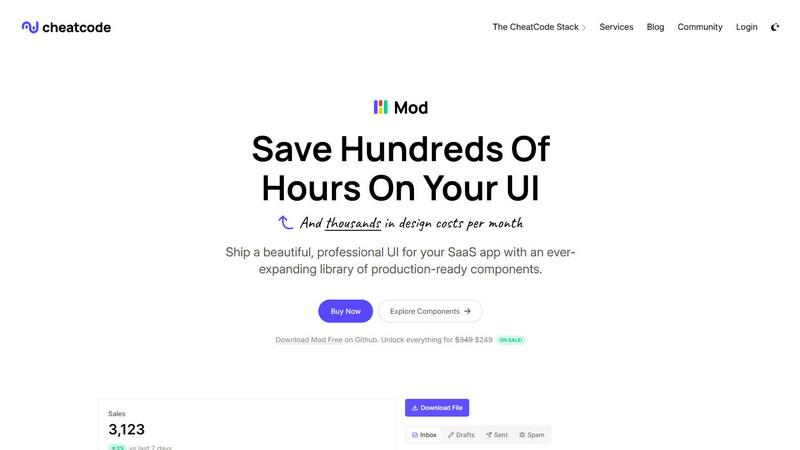
Mod is a dynamic CSS framework that accelerates the design of SaaS apps with a rich library of reusable UI components.

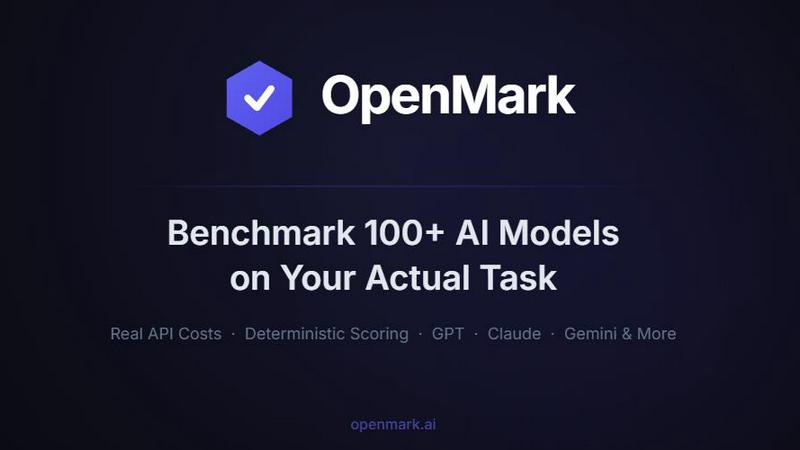
OpenMark AI continuously benchmarks over 100 LLMs on your actual task to find the best model for cost, speed, and quality.
Last updated: March 26, 2026
Visual Comparison
Mod
OpenMark AI
Feature Comparison
Mod
Extensive Component Library
Mod boasts a robust library of over 88 components, covering everything from buttons and forms to navigation menus and modals. This extensive selection allows developers to quickly implement complex UI elements without having to start from scratch, significantly accelerating the development process.
Versatile Styling Options
With 168 unique styles, Mod enables developers to customize their applications to fit their branding and user experience needs. These styles are designed to be easily adjustable, allowing for rapid iterations and refinements to ensure that the final product meets user expectations.
Dark Mode Support
Understanding the importance of user comfort, Mod includes built-in dark mode functionality. This feature allows developers to cater to users' preferences for low-light environments, enhancing the usability of applications while also promoting a modern, sleek aesthetic.
Framework-Agnostic Compatibility
Mod is designed to work seamlessly with various frameworks such as Next.js, Nuxt, Vite, Svelte, Rails, and Django. This framework-agnostic approach ensures that developers can integrate Mod into their existing projects without any compatibility issues, fostering a smoother development experience.
OpenMark AI
Plain Language Task Description
Describe the exact task you need an AI to perform using simple, natural language—no complex coding or prompt engineering required. The platform allows you to configure everything from simple instructions to advanced, multi-step workflows, making sophisticated benchmarking accessible to developers and product managers alike. This intuitive setup ensures you're testing what you actually intend to build.
Multi-Model Comparison in One Session
Run your defined task against a wide selection of models from various providers simultaneously. This side-by-side testing environment provides immediate, comparable results, allowing you to see how different models stack up against each other on your specific criteria without the hassle of managing multiple API consoles or scripts.
Real Performance & Cost Metrics
Get results based on actual API calls, not cached or theoretical numbers. OpenMark AI measures and displays critical metrics including latency (response time), the actual cost per request from the provider, and a scored assessment of output quality. This gives you a true picture of what to expect in production, focusing on real cost efficiency.
Stability and Variance Analysis
Understand model consistency by seeing how outputs change across repeat runs of the same task. The platform highlights variance, showing you whether a model is reliably good or just occasionally lucky. This focus on stability is crucial for building trustworthy, predictable AI features that perform the same way every time for your users.
Use Cases
Mod
Rapid Prototyping
Mod is an ideal tool for developers looking to quickly prototype their ideas. With its extensive library of components and styles, teams can rapidly create mockups and iterations, allowing for swift feedback and adjustments in the development cycle.
Building Responsive SaaS Applications
With a focus on mobile-first design, Mod is perfect for developers creating SaaS applications that need to perform well across all devices. Its responsive components ensure that applications look and function beautifully on smartphones, tablets, and desktops alike.
Enhancing Team Collaboration
For development teams, Mod facilitates better collaboration by providing a consistent design language. This consistency helps team members align on visual elements and UI functionality, reducing miscommunication and speeding up the development cycle.
Customizing User Experiences
Mod allows developers to easily implement tailored user experiences by leveraging its versatile styling options. This capability is particularly valuable for SaaS companies looking to differentiate themselves in competitive markets through unique and engaging interfaces.
OpenMark AI
Validating Model Choice for a New Feature
Before committing a model to a new AI-powered feature, use OpenMark AI to test candidate models on a prototype of your exact task. Compare their quality, speed, and cost on real prompts to make a data-driven selection that balances performance with budget, ensuring a strong foundation for your product launch.
Cost Optimization for Existing Workflows
If you're already using an LLM in production, benchmark alternative models to find potential savings. You might discover a less expensive model that delivers comparable quality for your specific use case, or a slightly more expensive one that drastically improves output, allowing for continuous refinement of your operational efficiency.
Ensuring Output Consistency for Critical Tasks
For applications where reliability is non-negotiable—such as data extraction, classification, or automated customer responses—test models across multiple runs to audit their stability. Identify and avoid models with high variance, selecting one that produces consistent, high-quality outputs every time to maintain user trust.
Prototyping and Research for AI Agents
When designing complex systems like AI agents or RAG (Retrieval-Augmented Generation) pipelines, test different LLMs for sub-tasks like routing, summarization, or reasoning. Quickly iterate on your design by benchmarking how various models handle these components, accelerating your research and development cycle with empirical data.
Overview
About Mod
Mod is an innovative CSS framework designed specifically for Software as a Service (SaaS) user interfaces. It streamlines the web development process by providing a comprehensive set of over 88 components and 168 styles, allowing developers to create visually appealing and functional applications with ease. Focused on enhancing productivity, Mod caters to both solo developers and larger teams, enabling them to ship high-quality SaaS applications faster while minimizing design costs. With features like dark mode and a mobile-first design approach, Mod ensures that applications are not only aesthetically pleasing but also responsive and user-friendly across various devices. Its framework-agnostic nature means it seamlessly integrates with popular technologies including Next.js, Nuxt, Vite, Svelte, Rails, and Django, making it a versatile choice for developers seeking to improve their workflows. With simple pricing structures and yearly updates, Mod embodies a commitment to continuous improvement, empowering developers to focus on what matters most: building exceptional software experiences.
About OpenMark AI
OpenMark AI is a powerful web application designed to end the guesswork in selecting large language models (LLMs) for production applications. It provides a comprehensive, task-level benchmarking platform where developers and product teams can describe their specific use case in plain language and run the same prompts against a vast catalog of over 100 models in a single, unified session. The core value proposition is delivering actionable, real-world data for pre-deployment decisions. Instead of relying on marketing claims or single, lucky outputs, OpenMark AI shows you performance variance, scored quality, real API latency, and actual cost per request across repeat runs. This cyclical, iterative approach to testing ensures you can continuously improve your model selection based on hard evidence, not hunches. Built for efficiency, it uses a hosted credit system, eliminating the need to manage and configure separate API keys for every provider like OpenAI, Anthropic, or Google. The platform is designed for those who prioritize cost efficiency—finding the optimal balance of quality relative to price—and need confidence that a model will deliver consistent, stable results every time it's called in a live feature.
Frequently Asked Questions
Mod FAQ
What is Mod and how does it benefit developers?
Mod is a CSS framework designed for SaaS applications, providing a vast library of components and styles that help developers build user-friendly and visually appealing interfaces quickly. Its framework-agnostic approach and responsive design features make it adaptable for various projects, enhancing productivity and reducing design costs.
Can Mod be used with popular frameworks?
Yes, Mod is framework-agnostic and can be integrated with a variety of popular frameworks such as Next.js, Nuxt, Vite, Svelte, Rails, and Django. This flexibility enables developers to incorporate Mod into their existing tech stacks seamlessly.
Is there support for dark mode in Mod?
Absolutely! Mod includes built-in support for dark mode, allowing developers to create applications that cater to users' preferences for low-light environments. This feature enhances user comfort while maintaining a sleek, modern aesthetic.
How frequently does Mod receive updates?
CheatCode, the creator of Mod, is committed to continuous improvement and provides yearly updates to the framework. These updates often include new components, styles, and features that help developers stay current with industry trends and user expectations.
OpenMark AI FAQ
How does OpenMark AI calculate costs?
Costs are calculated based on the actual pricing from each model provider (like OpenAI, Anthropic, etc.) for the tokens consumed by your prompts and the generated completions during the benchmark. OpenMark AI uses real API calls and passes the precise, per-request cost to you, so you see the true expense, not an estimate.
Do I need my own API keys to use OpenMark AI?
No, you do not need to provide or configure any external API keys. OpenMark AI operates on a credit-based system. You purchase credits through the platform, and it manages all the API calls to the various model providers on your behalf, simplifying setup and comparison.
What kind of tasks can I benchmark?
You can benchmark virtually any text-based task, including but not limited to classification, translation, data extraction, question answering, content generation, summarization, code writing, and simulating complex workflows like those used in AI agents or RAG systems. Describe your task in the editor to get started.
How does the platform measure output quality?
Quality is scored through a combination of automated evaluation metrics tailored to your task type and, where applicable, can incorporate your own defined criteria for success. The system analyzes factors like correctness, completeness, and adherence to instruction across all model outputs to provide a comparative quality score.